Skip to content

TechDirectArchive

Hands-on IT, Cloud, Security & DevOps Insights

  • Home
  • About
  • Advertise With US
  • Reviews
  • Contact
  • Toggle search form
Home » Windows » How to end a program via the Task Manager in Windows 11

How to end a program via the Task Manager in Windows 11

Posted on 05/11/202130/09/2023 Christian By Christian No Comments on How to end a program via the Task Manager in Windows 11
Windows 11 Task manager

Task Manager, previously referred to as Windows Task Manager, is a task manager, system monitor, and startup manager included with Microsoft Windows systems. The Task Manager is a very vital tool that helps everyone that uses Windows in dealing with resources utilizing the CPU, RAM, disk, or network resources. As at the time of writing this guide, you cannot open the Task Manager in Windows 11 just by right-clicking on the Taskbar.

This post will show you how to end a program via the Task Manager in Windows 11. You may want to see this guides on how to open and access the Task Manager “how to add access, pin the Task Manager on Windows 11” and “how to enable and disable automatic startup in Windows 11“. Kindly refer to these related guides: How to enable and disable automatic startup in Windows 11, how to view or change programs that run on startup, , how to stop Cisco Webex Meetings from starting up automatically on macOS, how to stop Zoom App from launching automatically at startup on Mac,

The Task Manager is one of the oldest Windows programs and one of the best if you want to control which programs and processes are active on your system and which resources they bind.The Task Manager is a professional tool that sometimes requires a lot of PC experience to utilize all that it has to offer.

How to end a program with Task Manager

To launch the Task Manager, click on start or search for the Task Manager as shown below. Alternatively, you can press Ctrl + Alt + Delete, then click Task Manager.

Search and select Task Manager

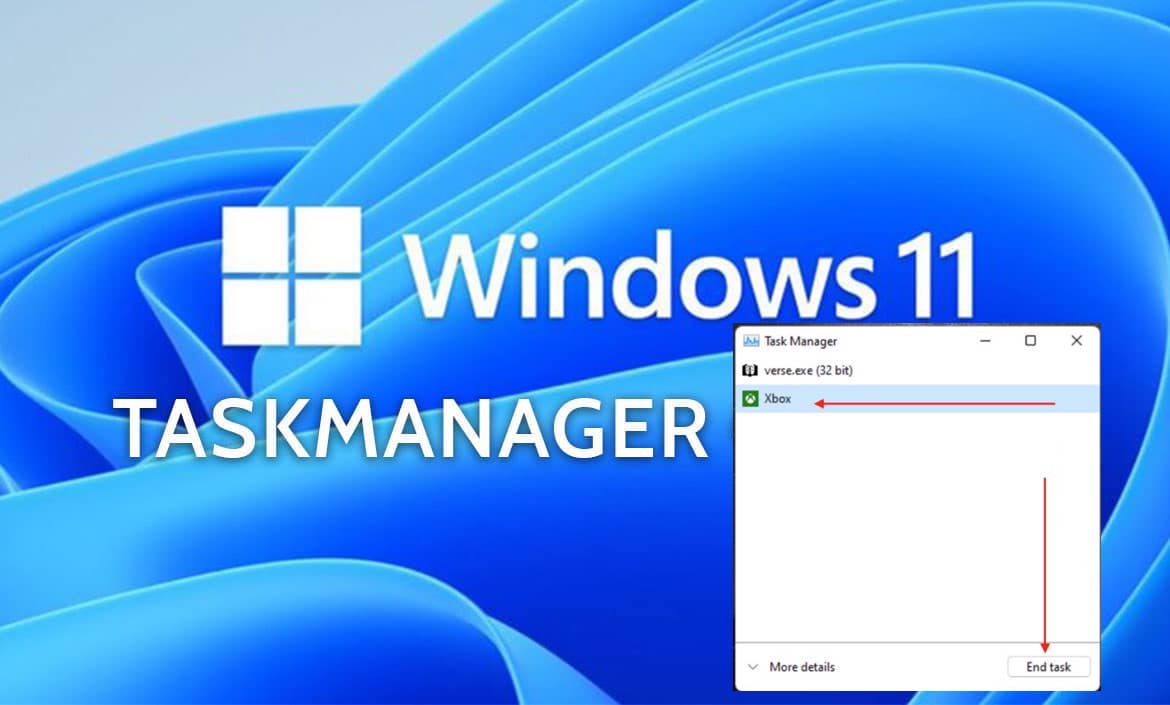
This will open the Task Manager. Since I wish to show you how to end (stop) and application from running. Select the application from the list of apps and click on End Task.

Click on End Task

You may also want to determine the CPU utilization, and Memory etc. Then all you need to do is to click on the “More details” as shown in the image above. You can also launch the resource monitor and this provides a quick summary of overall CPU, disk, network and memory utilization.

Click on Resource monitor

Note: The easiest and quickest way to close a locked up or frozen program when running Windows 11 is with the traditional keyboard shortcut of Alt+F4. When pressed simultaneously, they should immediately close down a non-responsive application. Kindly refer to these related guides: Process Explorer: Replace built-in Task Manager, how to enable and disable automatic startup in Windows 11, Various methods on how to launch Windows Task Manager, how to Launch macOS Activity Monitor (Task Manager) from the Utility and Terminal (Command Line), how to forcefully kill or stop a process in Windows, and how to view or change programs that run on startup.

I hope you found this blog post on ending a program via the Task Manager helpful. If you have any questions, please let me know in the comment session.
Rate this post

Thank you for reading this post. Kindly share it with others.

  • Share on X (Opens in new window) X
  • Share on Reddit (Opens in new window) Reddit
  • Share on LinkedIn (Opens in new window) LinkedIn
  • Share on Facebook (Opens in new window) Facebook
  • Share on Pinterest (Opens in new window) Pinterest
  • Share on Tumblr (Opens in new window) Tumblr
  • Share on Telegram (Opens in new window) Telegram
  • Share on WhatsApp (Opens in new window) WhatsApp
  • Share on Mastodon (Opens in new window) Mastodon
  • Share on Bluesky (Opens in new window) Bluesky
  • Share on Threads (Opens in new window) Threads
  • Share on Nextdoor (Opens in new window) Nextdoor
Windows Tags:Microsoft Windows, Task Manager, Windows 10, Windows 11, Windows Server 2016

Post navigation

Previous Post: Create Task Manager Shortcuts: How to add access, pin the Task Manager on Windows 11
Next Post: How to use the Azure Cloud Shell or Azure CLI and Azure PowerShell

Related Posts

  • windows workstations inactivity
    Configure Windows Device Inactivity Limit Locally and Domain Wide Windows
  • Computer policy could not be updated
    How to fix Computer Policy could not be updated successfully Windows
  • Screenshot 2022 04 02 at 23.05.24
    How to apply Windows Updates with PowerShell Windows
  • Driver Automation Tool
    Windows Driver Management: Upgrade Driver Automation Tool Windows
  • disable automatic updates in Windows
    How to disable automatic Windows updates via Windows Settings Windows
  • RDP
    The connection was denied because the user is not authorized for remote Login: Enable Remote Desktop Connection on Windows 11 for non-administrators or selected users Windows

More Related Articles

windows workstations inactivity Configure Windows Device Inactivity Limit Locally and Domain Wide Windows
Computer policy could not be updated How to fix Computer Policy could not be updated successfully Windows
Screenshot 2022 04 02 at 23.05.24 How to apply Windows Updates with PowerShell Windows
Driver Automation Tool Windows Driver Management: Upgrade Driver Automation Tool Windows
disable automatic updates in Windows How to disable automatic Windows updates via Windows Settings Windows
RDP The connection was denied because the user is not authorized for remote Login: Enable Remote Desktop Connection on Windows 11 for non-administrators or selected users Windows

Leave a Reply Cancel reply

You must be logged in to post a comment.

Microsoft MVP

VEEAMLEGEND

vexpert-badge-stars-5

Virtual Background

GoogleNews

Categories

veeaam100

Veeam Vanguard

  • windows 10 creators update wallpaper 1
    How to locate and edit the host file on Windows Windows Server
  • Screenshot 2024 02 09 at 1.06.54 PM
    Programmatically Deploying App Service Resources in Azure AWS/Azure/OpenShift
  • image 190
    Creating Profiles for your AWS Access Credentials for AWS Toolkit in Visual Studio AWS/Azure/OpenShift
  • vtpm 1
    Enable vTPM and BitLocker HyperV VM: Fix the device that cannot use a TPM module Virtualization
  • wsl5678uh
    Various methods to install Windows Subsystem for Linux Windows
  • Check Virtualization
    Enable Virtualization in BIOS: Determine if the Intel VT-x or AMD-V Virtualization Technology is enabled in BIOS Virtualization
  • bypass windows login main img
    How to disable auto login in Windows Windows
  • control panel
    Enable or Disable Control Panel and Windows Settings App Windows

Subscribe to Blog via Email

Enter your email address to subscribe to this blog and receive notifications of new posts by email.

Join 1,813 other subscribers
  • RSS - Posts
  • RSS - Comments
  • About
  • Authors
  • Write for us
  • Advertise with us
  • General Terms and Conditions
  • Privacy policy
  • Feedly
  • Telegram
  • Youtube
  • Facebook
  • Instagram
  • LinkedIn
  • Tumblr
  • Pinterest
  • Twitter
  • mastodon

Tags

Active Directory Azure Bitlocker Microsoft Windows PowerShell WDS Windows 10 Windows 11 Windows Deployment Services Windows Server 2016

Copyright © 2025 TechDirectArchive


Loading Comments...
 

You must be logged in to post a comment.