Skip to content

TechDirectArchive

Hands-on IT, Cloud, Security & DevOps Insights

  • Home
  • About
  • Advertise With US
  • Contact
  • Reviews
  • Toggle search form
Home » Windows » How to Find Security Identifier on Windows [Part 2]

How to Find Security Identifier on Windows [Part 2]

Posted on 27/12/202221/01/2026 Temitope Odemo By Temitope Odemo No Comments on How to Find Security Identifier on Windows [Part 2]
sid5

The SID (Security Identifier) or Windows user SID is used to identify a security principal or security group and is like a passport that is assigned to every computer during the installation of the operating system. In this guide, we shall discuss “How to Find Security Identifier on Windows [Part 2]”. Here is a similar post and how to Clone a Virtual Machine via Export and Import, What are System Partition and Boot Partition in Windows?, and Windows Local Account Authorization and Access Control.

With the SID you can assign special privileges to some user accounts or restrict privileges to some accounts. SID is a unique value that is used to identify any security entity that the OS can authenticate.

A security entity can be a security principal like a user account. Or a computer account, and can also be a security group. Microsoft Windows security depends on SIDs for authentication, the Windows Server makes use of SIDs to identify accounts.

You will find out that the user account name can change. But the SID remains the same which still helps to identify the account.

If you want to read more on Windows security you can read these: New Windows 11 encryption features and security enhancements will help protect hybrid work, how to use the Windows Sandbox as a security feature in Windows 10 and 11, and how to enable Secure Boot on PC to install Windows 11.

Finding Security Identifier using Command Prompt

1: Run Command Prompt as an administrator
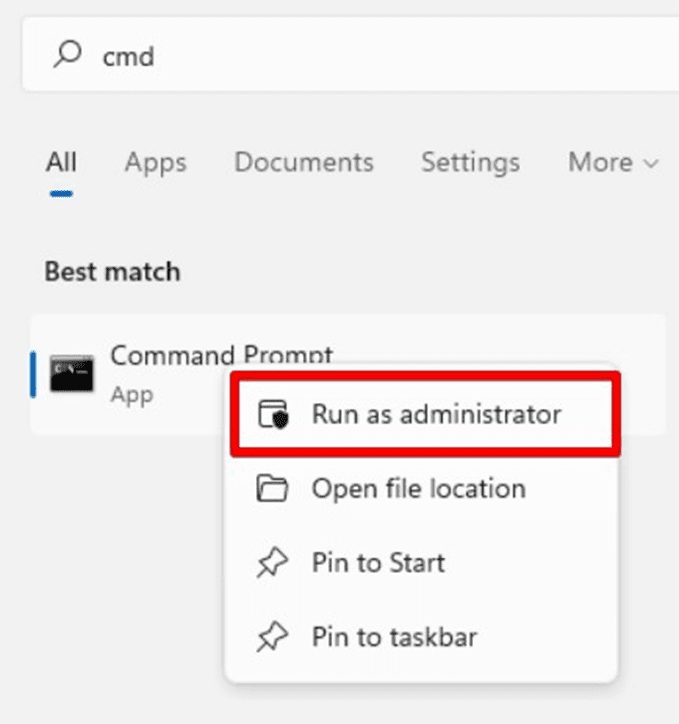
image-101

2. Once the Command Prompt opens you can type command below. And hit enter key, after some minutes the result will be displayed.

wmic useraccount get name, sid 
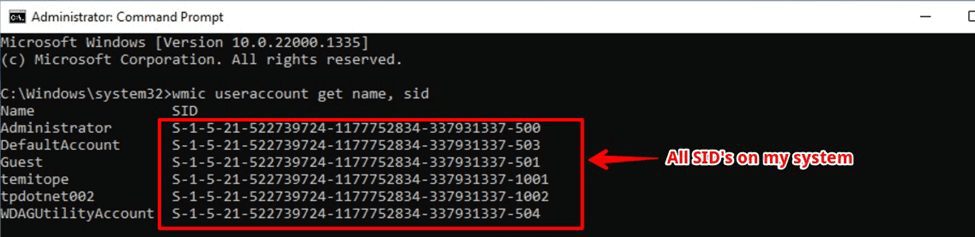
image-102

Finding Security Identifier using PowerShell

3. Open Windows PowerShell as an Admin and type the command below.

Get-WmiObject win32_useraccount | Select domain,name,sid
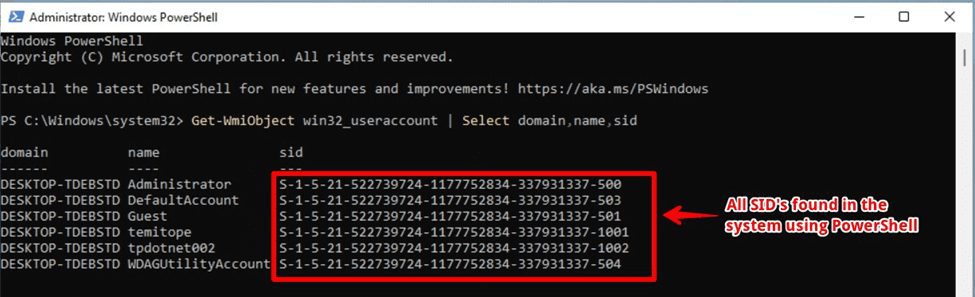
image-103

Please, see How to block the Change Password Feature for All Users via the Exchange Administrative Center. Also, see AnyConnect SSL VPN Client Configuration Guide, and SSH and Telnet on Cisco ASA 5505: Quick Setup Guide.

Via the Windows Registry

4. Registry Editor can also be used to find the SID on your system. Open the Run and type Regedit to launch the registry. Or you can just type the registry editor on the search box to launch it.

image-104

Follow the path below to get to the SIDs. You will see all users and the corresponding SIDs.

HKEY_LOCAL_MACHINE\SOFTWARE\Microsoft\Windows NT\CurrentVersion\ProfileList
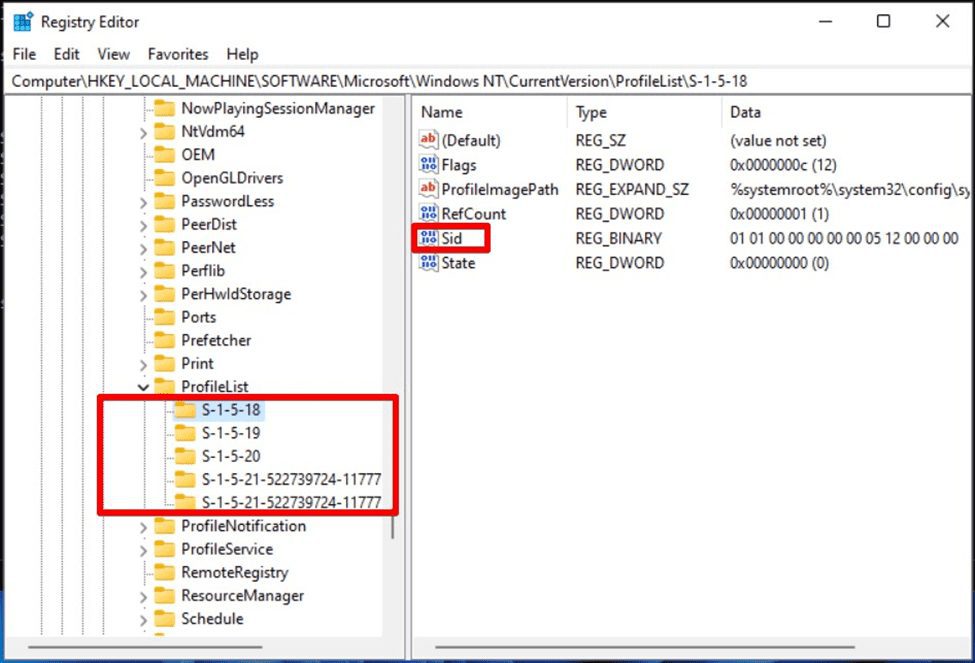
image-105

I hope you found this blog post on how to Find Security Identifier on Windows [Part 2] very interesting and helpful. In case you have any questions do not hesitate to ask in the comment section.


5/5 - (1 vote)

Thank you for reading this post. Kindly share it with others.

  • Share on X (Opens in new window) X
  • Share on Reddit (Opens in new window) Reddit
  • Share on LinkedIn (Opens in new window) LinkedIn
  • Share on Facebook (Opens in new window) Facebook
  • Share on Pinterest (Opens in new window) Pinterest
  • Share on Tumblr (Opens in new window) Tumblr
  • Share on Telegram (Opens in new window) Telegram
  • Share on WhatsApp (Opens in new window) WhatsApp
  • Share on Mastodon (Opens in new window) Mastodon
  • Share on Bluesky (Opens in new window) Bluesky
  • Share on Threads (Opens in new window) Threads
  • Share on Nextdoor (Opens in new window) Nextdoor
Windows, Windows Server Tags:Microsoft Windows, Windows 10, Windows 11, Windows Security, Windows Server 2016

Post navigation

Previous Post: Fix “Getting Windows Ready” Don’t turn off your computer stuck on Windows
Next Post: How to find User Security Identifier (SID) in Windows [Part 1]

Related Posts

  • dism failed errors windows thumbnail 1
    Error 0x800f0830: Discard the modified Image and start again, no operation was performed Windows Server
  • Computer policy could not be updated
    How to fix Computer Policy could not be updated successfully Windows
  • reboot computer
    Determine the last boot time of a Windows Server Windows Server
  • How to install and configure a Standalone DNS Server
    How to Install and Configure a Standalone DNS Server Windows Server
  • 41592 3264bitw10
    What is the difference between 32-bit and 64-bit processors Windows Server
  • credentialguard
    Enable or disable Windows Defender Credential Guard Security | Vulnerability Scans and Assessment

More Related Articles

dism failed errors windows thumbnail 1 Error 0x800f0830: Discard the modified Image and start again, no operation was performed Windows Server
Computer policy could not be updated How to fix Computer Policy could not be updated successfully Windows
reboot computer Determine the last boot time of a Windows Server Windows Server
How to install and configure a Standalone DNS Server How to Install and Configure a Standalone DNS Server Windows Server
41592 3264bitw10 What is the difference between 32-bit and 64-bit processors Windows Server
credentialguard Enable or disable Windows Defender Credential Guard Security | Vulnerability Scans and Assessment

Leave a Reply Cancel reply

You must be logged in to post a comment.

Microsoft MVP

VEEAMLEGEND

vexpert-badge-stars-5

Virtual Background

GoogleNews

Categories

veeaam100

Veeam Vanguard

  • uninstall installed Windows Update from Windows
    How to uninstall installed Windows Update Windows
  • Manage Log Files via Logrotate
    How To Use Logrotate For Managing Log Files In Ubuntu Linux Linux
  • reset
    How to Reset a Snom Phone Network | Monitoring
  • image 30
    How to Fix “Insufficient System Resources Exist to Complete the Requested Service” error Windows
  • filezilla 1
    Connect to a FileZilla Server: How to install and configure a FileZilla Server on Windows Windows Server
  • Featured image 1
    How and where to find your BitLocker recovery key on Windows Security | Vulnerability Scans and Assessment
  • GPO 2
    Why GPO is not the best solution for managing Windows updates Windows Server
  • AzureCloudShell
    Provisioning Azure Resources using Azure Az PowerShell Cmdlet from Cloud Shell AWS/Azure/OpenShift

Subscribe to Blog via Email

Enter your email address to subscribe to this blog and receive notifications of new posts by email.

Join 1,808 other subscribers
  • RSS - Posts
  • RSS - Comments
  • About
  • Authors
  • Write for us
  • Advertise with us
  • General Terms and Conditions
  • Privacy policy
  • Feedly
  • Telegram
  • Youtube
  • Facebook
  • Instagram
  • LinkedIn
  • Tumblr
  • Pinterest
  • Twitter
  • mastodon

Tags

AWS Azure Bitlocker Microsoft Windows PowerShell WDS Windows 10 Windows 11 Windows Deployment Services Windows Server 2016

Copyright © 2025 TechDirectArchive


Loading Comments...
 

You must be logged in to post a comment.