Skip to content

TechDirectArchive

Hands-on IT, Cloud, Security & DevOps Insights

  • Home
  • About
  • Advertise With US
  • Reviews
  • Contact
  • Toggle search form
Home » Linux » Openstack Deployment with Devstack
  • Featured image Clearing cache
    How to clear cache in Windows 11 Windows
  • Mimikatz hacktool Trillix
    Windows Defender detects Endpoint Security HipHandlers.dll Security | Vulnerability Scans and Assessment
  • Featured image Unblock Microsoft Store
    How to Unblock Microsoft Store on Windows 11 Windows
  • Comprehensive Guide to Passkeys on Windows Devices
    Comprehensive Guide to Passkeys on Windows Devices Windows
  • banner
    How to Integrate TestRail with Cypress Automation
  • how to install ms office 365 title
    How to complete Microsoft Office 365 Family Subscription Mac
  • Slide2 3
    Sudo Error on Ubuntu: Fixing ‘unknown uid 1000: Who are you?’ Linux
  • How to create edit save exit file
    Mastering Vim in Linux: How to Create, Edit, Save, and Quit Files Linux

Openstack Deployment with Devstack

Posted on 27/09/202128/08/2023 Christian By Christian No Comments on Openstack Deployment with Devstack
openstack-ola

OpenStack is a free, open standard cloud computing platform that hat uses pooled virtual resources to build and manage private and public clouds. Here we will be deploying OpenStack with an Ubuntu server for Lab purposes. Openstack controls large pools of compute, storage, and networking resources, all managed through APIs or a dashboard. Beyond standard infrastructure-as-a-service functionality, additional components provide orchestration, fault management, and service management amongst other services to ensure high availability of user applications.

In this tutorial, we willl be using 2 VMs (1 cluster node and 1 compute nodes)

Configuring Cluster Node.
Install Ubuntu and update packages (Please take note of the network settings and compute IP Address).

image-83

Then install Missing Packages

apt-get install git openssh-server (use sudo if not logged in as root)
image-84

We will use git to pull Openstack packages the configure the openstack user account that can sudo without password Authentication.

groupadd stack
useradd -g stack -s /bin/bash -d /opt/stack -m stack

image-85
image-86
vi /etc/sudoers
then add 
%stack ALL=(ALL) NOPASSWD: ALL
set the stack user account passwd
passwd stack

Now log out and log in as the user stack to test.

Next step is to configure ssh keys. To be able to access other nodes remotelt without the need to log in or authentication.

mkdir ~/.ssh; chmod 700 ~/.ssh
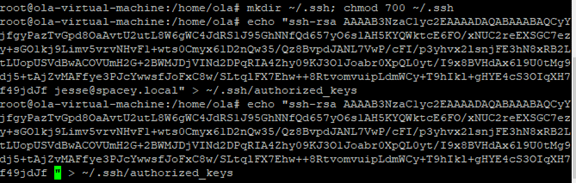
image-87
Pull Openstack via git
git clone https://git.openstack.org/openstack-dev/devstack
image-88

Do the above steps on all cluster nodes also.
Next is to configure all cluster nodes local DNS settings by mapping the hostnames to the IP address on each server.

image-89

cd to the devstack director on the controller node

cd /opt/stack/devstack

and create the below files

touch local.conf 
touch stack.sh
vim stack.sh and add the line
for i in `seq 2 10`; do /opt/stack/nova/bin/nova-manage fixed reserve 10.0.0.$i; done

now execute the stack.sh script and wait

NOTE- this must be run as stack user and also change the owner of the devstack folder to the stack user

Got the error 'error cannot uninstall simplejson' during the instalation. To fix, do the following;
sudo apt purge python3-simplejson
pip install pyasn1-modules
Then execute the script again
image-90

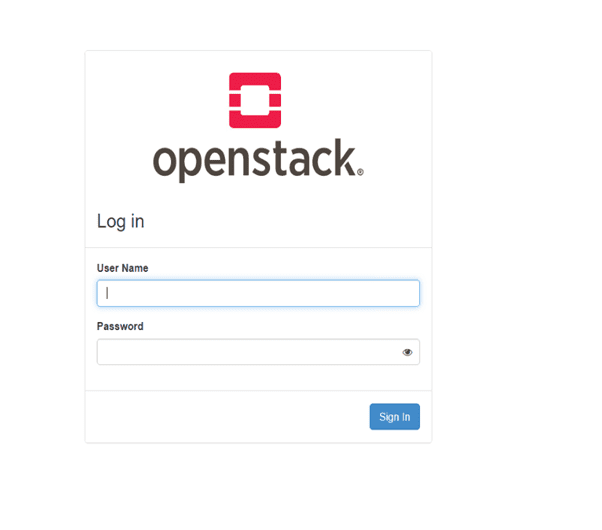
Below is the Openstack login page

image-91

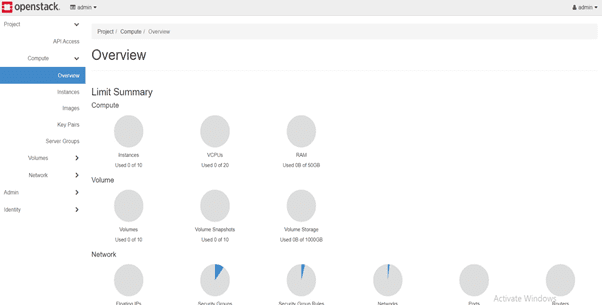
Now log in and access your dashboard

image-92
image-93

INSTALLING COMPUTE NODES

Now, OpenStack is installed, let’s configure and add compute nodes. Edit the following lines on the compute nodes x.

NOTE; You should have the stack user and openstack packages on the compute nodes before starting this process

cd /opt/stack/devstack
touch local.conf
nano local.conf

And set the following file as

[[local|localrc]]
HOST_IP=172.18.14.218 # change this per compute node
FLAT_INTERFACE=ens33
FIXED_RANGE=10.0.0.0/24
FIXED_NETWORK_SIZE=4096
FLOATING_RANGE=172.18.14.144/28
MULTI_HOST=1
LOGFILE=/opt/stack/logs/stack.sh.log
ADMIN_PASSWORD=redhat
DATABASE_PASSWORD=redhat
RABBIT_PASSWORD=redhat
SERVICE_PASSWORD=redhat
DATABASE_TYPE=mysql
SERVICE_HOST=172.18.14.219
MYSQL_HOST=$SERVICE_HOST
RABBIT_HOST=$SERVICE_HOST
GLANCE_HOSTPORT=$SERVICE_HOST:9292
ENABLED_SERVICES=n-cpu,n-net,n-api-meta,c-vol
NOVA_VNC_ENABLED=True
NOVNCPROXY_URL="http://$SERVICE_HOST:6080/vnc_auto.html"
VNCSERVER_LISTEN=$HOST_IP
VNCSERVER_PROXYCLIENT_ADDRESS=$VNCSERVER_LISTEN

Fill in your host and service IP address to match your servers.

cd /opt/stack/devstack
./stack.sh

Once completed, you now have more compute resources added to your cluster.

Rate this post

Thank you for reading this post. Kindly share it with others.

  • Click to share on X (Opens in new window) X
  • Click to share on Reddit (Opens in new window) Reddit
  • Click to share on LinkedIn (Opens in new window) LinkedIn
  • Click to share on Facebook (Opens in new window) Facebook
  • Click to share on Pinterest (Opens in new window) Pinterest
  • Click to share on Tumblr (Opens in new window) Tumblr
  • Click to share on Telegram (Opens in new window) Telegram
  • Click to share on WhatsApp (Opens in new window) WhatsApp
  • Click to share on Pocket (Opens in new window) Pocket
  • Click to share on Mastodon (Opens in new window) Mastodon
  • Click to share on Bluesky (Opens in new window) Bluesky
  • Click to share on Threads (Opens in new window) Threads
  • Click to share on Nextdoor (Opens in new window) Nextdoor
Linux

Post navigation

Previous Post: How to Deploy Dynamic Website to AWS EC2
Next Post: Cost Management in Azure Using Cost Analysis Tool

Related Posts

  • screenshot 2020 05 05 at 22.42.35
    How to run Windows applications on Linux via WineHQ Linux
  • image 129
    Using Awx to deploy, schedule and run playbooks Linux
  • google sdk feature
    How To Install Google Cloud SDK on a Linux System Linux
  • FEATUREDC
    How to create Confidential VMs in Azure AWS/Azure/OpenShift
  • HOW TO AUTOMATE A PROCESS IN LINUX@
    Shell Scripting: How to Automate a Process in Linux Linux
  • selinux in production
    How to locate directory file context and restore it with SELinux Linux

More Related Articles

screenshot 2020 05 05 at 22.42.35 How to run Windows applications on Linux via WineHQ Linux
image 129 Using Awx to deploy, schedule and run playbooks Linux
google sdk feature How To Install Google Cloud SDK on a Linux System Linux
FEATUREDC How to create Confidential VMs in Azure AWS/Azure/OpenShift
HOW TO AUTOMATE A PROCESS IN LINUX@ Shell Scripting: How to Automate a Process in Linux Linux
selinux in production How to locate directory file context and restore it with SELinux Linux

Leave a Reply Cancel reply

You must be logged in to post a comment.

Microsoft MVP

VEEAMLEGEND

vexpert-badge-stars-5

Virtual Background

GoogleNews

Categories

veeaam100

sysadmin top30a

  • Featured image Clearing cache
    How to clear cache in Windows 11 Windows
  • Mimikatz hacktool Trillix
    Windows Defender detects Endpoint Security HipHandlers.dll Security | Vulnerability Scans and Assessment
  • Featured image Unblock Microsoft Store
    How to Unblock Microsoft Store on Windows 11 Windows
  • Comprehensive Guide to Passkeys on Windows Devices
    Comprehensive Guide to Passkeys on Windows Devices Windows
  • banner
    How to Integrate TestRail with Cypress Automation
  • how to install ms office 365 title
    How to complete Microsoft Office 365 Family Subscription Mac
  • Slide2 3
    Sudo Error on Ubuntu: Fixing ‘unknown uid 1000: Who are you?’ Linux
  • How to create edit save exit file
    Mastering Vim in Linux: How to Create, Edit, Save, and Quit Files Linux

Subscribe to Blog via Email

Enter your email address to subscribe to this blog and receive notifications of new posts by email.

Join 1,841 other subscribers
  • RSS - Posts
  • RSS - Comments
  • About
  • Authors
  • Write for us
  • Advertise with us
  • General Terms and Conditions
  • Privacy policy
  • Feedly
  • Telegram
  • Youtube
  • Facebook
  • Instagram
  • LinkedIn
  • Tumblr
  • Pinterest
  • Twitter
  • mastodon

Tags

AWS Azure Bitlocker Microsoft Windows PowerShell WDS Windows 10 Windows 11 Windows Deployment Services Windows Server 2016

Copyright © 2025 TechDirectArchive


Loading Comments...
 

You must be logged in to post a comment.