Skip to content

TechDirectArchive

Hands-on IT, Cloud, Security & DevOps Insights

  • Home
  • About
  • Advertise With US
  • Reviews
  • Contact
  • Toggle search form
Home » Windows » Mount an ISO image in Windows 10 and 11

Mount an ISO image in Windows 10 and 11

Posted on 28/12/202218/03/2023 Temitope Odemo By Temitope Odemo No Comments on Mount an ISO image in Windows 10 and 11
iso10

An ISO image is also known as an ISO file and it’s a type of disc image that can be used as an archive file and contain all sector data on an optical disc. The file extension is .iso which is taken from the ISO 9660 file system used on a CD-ROM media and also universal Disk Format (UDF) which is a file system used on DVD. If you have an ISO image now you don’t need a third-party tool to extract it, Microsoft has added features that support this from Windows 8. In this guide, you will learn how to mount an ISO image in Windows 10 and 11. You may want to learn How to put multiple OS ISO files in one Bootable USB Drive, and how to create a Windows 10 or 11 bootable USB with UEFI support,

When you mount an ISO file, your PC will treat the file like a CD or DVD that is inserted into the disc drive. But you need to exercise some caution when mounting these files as they can contain some malicious programs. So there is a need to have an anti-virus program installed on your system to scan through any iso files that you may want to mount to your computer.

Many software companies use ISO images in the distribution of their applications to users, an example is Microsoft which make use of ISO image to distribute different trial versions of their operating systems. Here are some more guides: How to create Windows 11 Bootable USB drive with the Media Creation Tool, How to create a bootable USB using Rufus on Windows.

How to mount ISO images with File Explorer on Windows 10 and 11

1: Browse to the folder with the ISO image. Double-click on the .iso file to mount it.
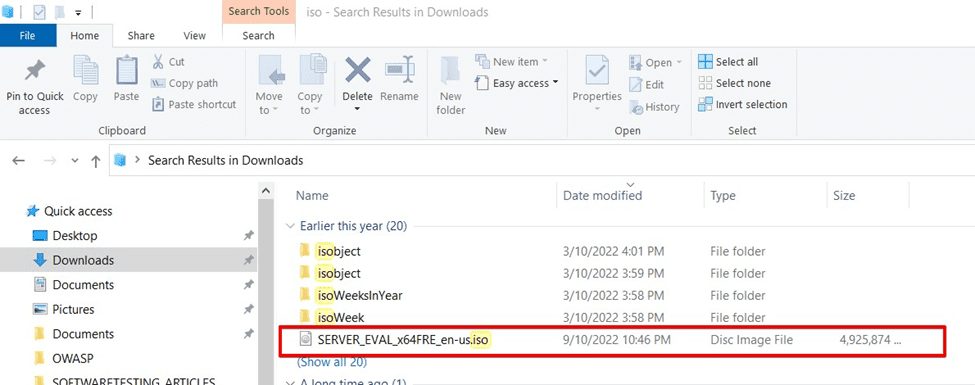
image-113

On Windows 10, immediately you double-click the iso you will get the below message and when you click Open the iso image will open just like a folder and you can see the files.

The iso image gets attached to the computer like a drive immediately and you can extract your files from it. Windows 11 may not pop up this message and will open up immediately.

image-114

How to Mount ISO image from the context menu on Windows 10 and 11

2. Browse to the folder with the ISO image. Right-click the .iso file and from the context menu select the Mount option. Once that is done you will be able to access all the ISO files.

On Windows 10

Follow the steps below to mount an ISO image in Windows 10
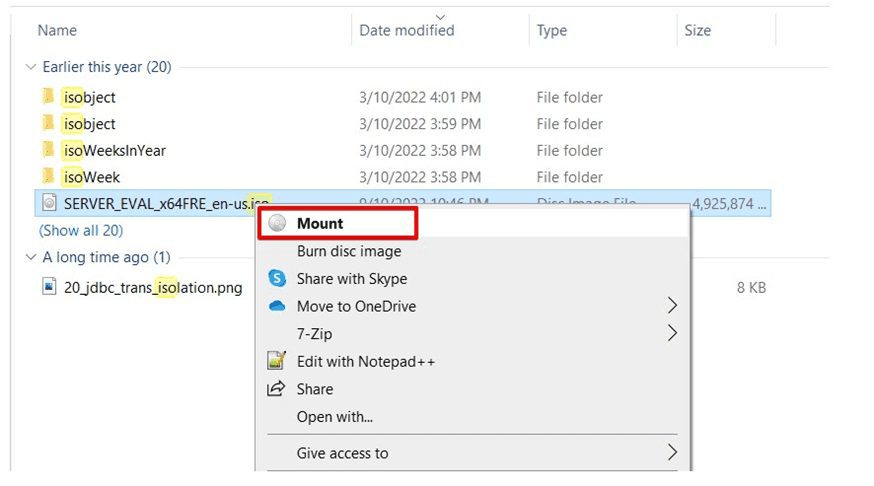
image-115

Mount ISO on Windows 11

Kindly follow the steps below to mount the ISO image on Windows 11
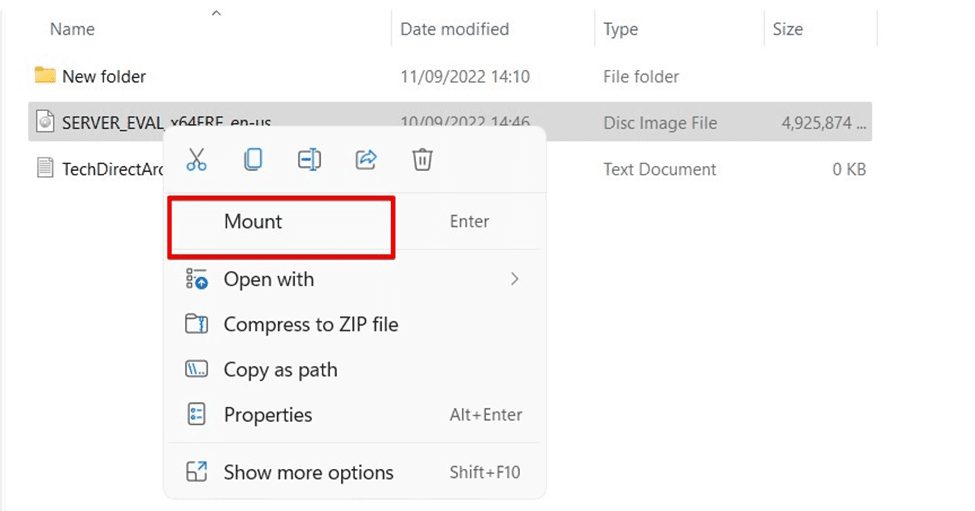
image-116

How to Mount an image from the ribbon menu on Windows 10 and 11

3. Browse to the folder with the ISO image and Select the .iso file. On the Disk Image Tools tab click the Mount button.

On Windows 10
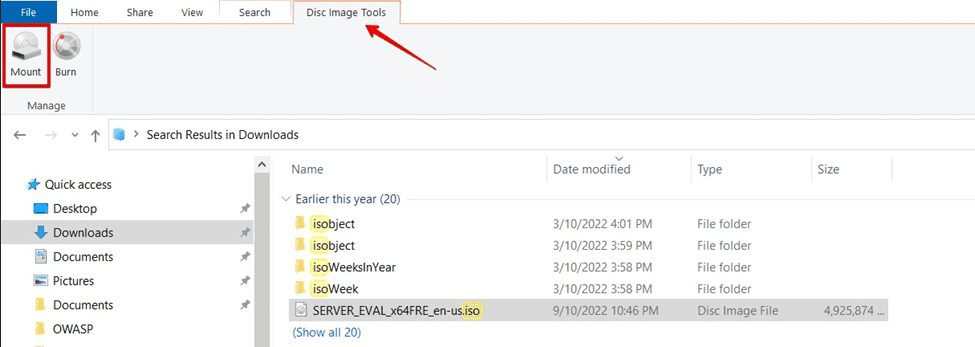
image-117

Mount an ISO Image on Windows 11

image-118

How to Unmount an ISO image

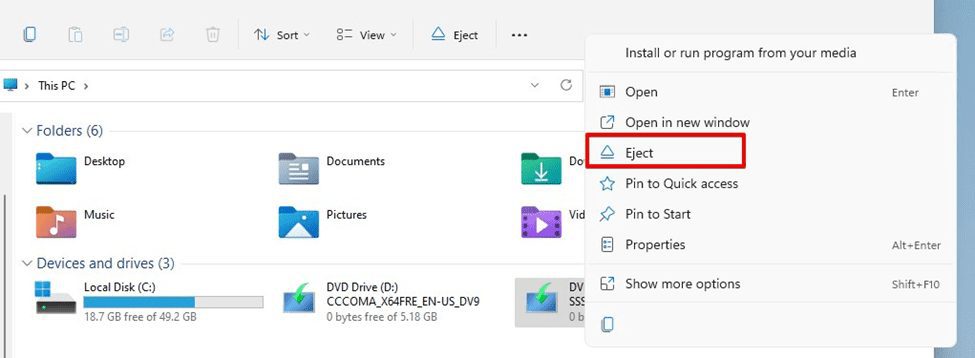
4. Just as it’s easy to mount it is easier to unmount after finding out you no longer need the image. Just right-click the virtual drive and select the Eject option.

To unount an ISO Image Windows 10, please follow these steps below

image-119

On Windows 11

image-120

How to mount and unmount ISO Images with PowerShell

5. Open PowerShell as administrator and type this command to mount an ISO image and hit the enter key: Mount-DiskImage -ImagePath "PATH\TO\ISOFILE"

Replace the “PATH\TO\ISOFILE” with the actual location path of your .iso file.

Mounting PowerShell
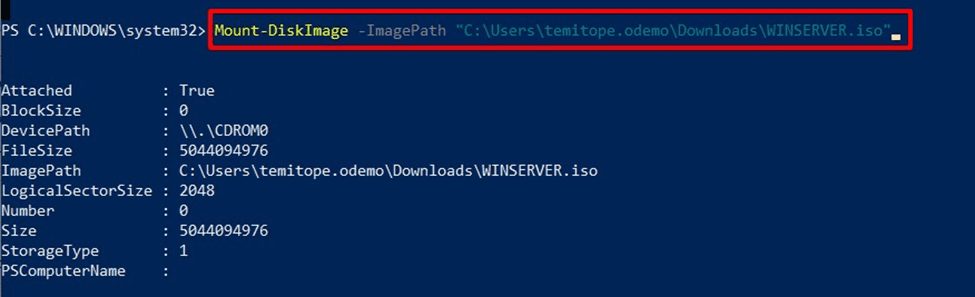
image-121

6. Use the below command to unmount:

Dismount-DiskImage -ImagePath "PATH\TO\ISOFILE"

Unmounting PowerShell
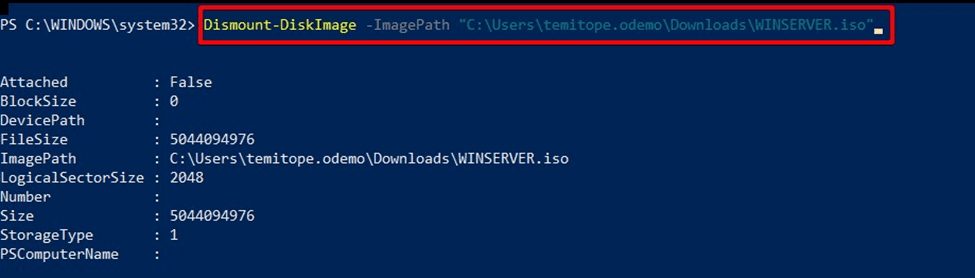
image-122

I hope you found this blog post on how to Mount an ISO image in Windows 10 and 11 interesting and helpful. In case you have any questions do not hesitate to ask in the comment section.

Rate this post

Thank you for reading this post. Kindly share it with others.

  • Share on X (Opens in new window) X
  • Share on Reddit (Opens in new window) Reddit
  • Share on LinkedIn (Opens in new window) LinkedIn
  • Share on Facebook (Opens in new window) Facebook
  • Share on Pinterest (Opens in new window) Pinterest
  • Share on Tumblr (Opens in new window) Tumblr
  • Share on Telegram (Opens in new window) Telegram
  • Share on WhatsApp (Opens in new window) WhatsApp
  • Share on Mastodon (Opens in new window) Mastodon
  • Share on Bluesky (Opens in new window) Bluesky
  • Share on Threads (Opens in new window) Threads
  • Share on Nextdoor (Opens in new window) Nextdoor
Windows, Windows Server Tags:Hypervisor, IMAGE, ISO, ISO Files, ISO Image, Microsoft Windows, Virtual Machine, virtualization, Windows 10, Windows 11, Windows Server 2016

Post navigation

Previous Post: Batch rename multiple files on Windows
Next Post: Fix Windows Admin Center cannot be reached

Related Posts

  • xxxxxx
    How to move the Taskbar to a second screen in Windows Windows
  • Featured image Audioissue
    How to Fix Audio Services Not Responding on Windows 10 and 11 Windows
  • diagnostic6
    How to enable and use Diagnostic Data Viewer on Windows Windows
  • banner
    How to hide Folders and Files from Search Results in Windows Windows
  • How to Fix Scanning and Repairing Drive on Every Boot
    How to Fix Scanning and Repairing Drive on Every Boot Windows
  • drivelock 1
    How to activate DriveLock License on Windows Server Windows Server

More Related Articles

xxxxxx How to move the Taskbar to a second screen in Windows Windows
Featured image Audioissue How to Fix Audio Services Not Responding on Windows 10 and 11 Windows
diagnostic6 How to enable and use Diagnostic Data Viewer on Windows Windows
banner How to hide Folders and Files from Search Results in Windows Windows
How to Fix Scanning and Repairing Drive on Every Boot How to Fix Scanning and Repairing Drive on Every Boot Windows
drivelock 1 How to activate DriveLock License on Windows Server Windows Server

Leave a Reply Cancel reply

You must be logged in to post a comment.

Microsoft MVP

VEEAMLEGEND

vexpert-badge-stars-5

Virtual Background

GoogleNews

Categories

veeaam100

Veeam Vanguard

  • How to Enable High Dynamic Range on Windows 11
    How to Enable High Dynamic Range on Windows 11 Windows
  • Screenshot 2022 04 27 at 00.50.35
    How to create a BitLocker System Partition [Part 2] Windows
  • slide10
    Add Dynamic Wallpaper controlled by time on Windows 10 and 11 Windows
  • command prompt powershell 670x335 1
    How to Start, Stop and Restart Windows Server Update WSUS Services via PowerShell and CMD Windows
  • Lockout7
    Change Account Lockout Threshold for Local Accounts in Windows: The reference account is locked Windows
  • drivelock 1280x720 1
    The server could not be reached or validated: Timeout expired. The Time out expired prior to obtaining a connection from the pool Security | Vulnerability Scans and Assessment
  • winSEARCH
    Hide or Remove Search Button from Windows 10 Taskbar Windows
  • cisco ASA
    Basic Cisco ASA troubleshooting Commands Guide Network | Monitoring

Subscribe to Blog via Email

Enter your email address to subscribe to this blog and receive notifications of new posts by email.

Join 1,808 other subscribers
  • RSS - Posts
  • RSS - Comments
  • About
  • Authors
  • Write for us
  • Advertise with us
  • General Terms and Conditions
  • Privacy policy
  • Feedly
  • Telegram
  • Youtube
  • Facebook
  • Instagram
  • LinkedIn
  • Tumblr
  • Pinterest
  • Twitter
  • mastodon

Tags

AWS Azure Bitlocker Microsoft Windows PowerShell WDS Windows 10 Windows 11 Windows Deployment Services Windows Server 2016

Copyright © 2025 TechDirectArchive

Loading Comments...

You must be logged in to post a comment.