Skip to content

TechDirectArchive

Hands-on IT, Cloud, Security & DevOps Insights

  • Home
  • About
  • Advertise With US
  • Reviews
  • Contact
  • Toggle search form
Home » Windows Server » Unable to locate the account: Fix call to DsGetDcNameWithAccount failed with return value 0x0000054B

Unable to locate the account: Fix call to DsGetDcNameWithAccount failed with return value 0x0000054B

Posted on 16/03/202125/03/2024 Christian By Christian 2 Comments on Unable to locate the account: Fix call to DsGetDcNameWithAccount failed with return value 0x0000054B
fds

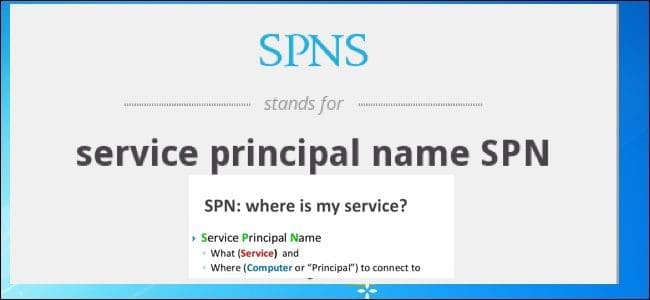
A service principal name (SPN) is a unique identifier of a service instance. SPNs are used by Kerberos authentication to associate a service instance with a service logon account. This allows a client application to request that the service authenticate an account, even if the client does not have the account name.In this article, we shall discuss “Unable to locate the account: Fix call to DsGetDcNameWithAccount failed with return value 0x0000054B”. Learn about the various types of Kerberos delegations.

Setspn is a command-line tool that is built into Windows Server 2008. It is available if you have the Active Directory Domain Services (AD DS) server role installed.

Also, see how to perform redirection from HTTP to HTTPS. Also see how to configure SSL between WSUS upstream and downstream servers, and how to set up and configure Windows server update services (WSUS).

How to run SPN in Elevated Mode

To use setspn, you must run the setspn command from an elevated command prompt. To open an elevated command prompt, click Start, right-click Command Prompt, and then click Run as administrator.

The following error could be a result of many other issues. In my case, I had no permission issue. The environment and service accounts were all available and correctly configured to run the SPN command.

Yet it failed with the following error “FindDomainForAccount: Call to DsGetDcNameWithAccountW failed with return value 0x0000054B. Unable to locate account MBAM-IISAP-SVC”

Screenshot-2021-03-16-at-14.23.40

Note: If you do not have administrative rights to create SPNs, you must ask the Domain administrators in their Organisation Administrators in your organisation to create the SPN for you by using the following command. To set this for your NetBIOS hostname, use the command below.

Kindly refer to the following related contents: Event ID 5059: Application pool has been disabled or Changing identity user for IIS Application Pool, and how to install Pleasant Password Server.

Solution

Please review the SPN command you are using to set (register) the Service Principal Name (SPN) for the hostname or FQDN under the domain account.

As you can see in the image above, I had an error in the account name. I was using “techdirectarchive\MBAM-IISAP-SVC” instead of “techdirectarchi\MBAM-IISAP-SVC”. This can be very difficult to spot if you have used to a specific domain account name. Upon noticing this, I ran the command again and it was successful.

setspn.exe -S http/mbamserv1 techdirectarchi\MBAM-IISAP-SVC
Screenshot 2021 03 16 at 14.23.40

This will enable the MBAM server to authenticate communication from the Administration and Monitoring Website and the Self-Service Portal.

You must register a Service Principal Name (SPN) for the hostname or FQDN under the domain account that you are using for the web application pool “in my case MBAM-IISAP-SVC”. 

To see the list SPNs registered to target accounts for the specific server, please run the following.

SETSPN -L mbamserv1
Screenshot-2021-03-16-at-21.14.05

Note: If the logon account of a service instance changes, the SPNs must be re-registered under the new account. 

I hope you found this blog post helpful on “Unable to locate the account: Fix call to DsGetDcNameWithAccount failed with return value 0x0000054B”. If you have any questions, please let me know in the comment session.

Rate this post

Thank you for reading this post. Kindly share it with others.

  • Share on X (Opens in new window) X
  • Share on Reddit (Opens in new window) Reddit
  • Share on LinkedIn (Opens in new window) LinkedIn
  • Share on Facebook (Opens in new window) Facebook
  • Share on Pinterest (Opens in new window) Pinterest
  • Share on Tumblr (Opens in new window) Tumblr
  • Share on Telegram (Opens in new window) Telegram
  • Share on WhatsApp (Opens in new window) WhatsApp
  • Share on Mastodon (Opens in new window) Mastodon
  • Share on Bluesky (Opens in new window) Bluesky
  • Share on Threads (Opens in new window) Threads
  • Share on Nextdoor (Opens in new window) Nextdoor
Windows Server Tags:IIS, Service Logon Account, services, users, Windows Server 2016

Post navigation

Previous Post: How to add an account to the local IIS_IUSRS group
Next Post: Configure log on as a batch job permissions on any server

Related Posts

  • group
    How to update PowerShell and Package Management via Group Policy Object Windows Server
  • Implementing DHCP Server
    Comprehensive Guide to Install DHCP Server on Windows Server Windows Server
  • connect to RDP automatically
    RDP Configuration Settings: Connect automatically to RDP session Windows
  • Expired Evaluation Configuration Manager to Full Version
    Upgrade Expired Evaluation Configuration Manager to Full Version Windows Server
  • remote desktop version and protocol
    Determine the Remote Desktop Client Version Windows
  • Azure Backup 1
    How to Install Azure Backup Agent AWS/Azure/OpenShift

More Related Articles

group How to update PowerShell and Package Management via Group Policy Object Windows Server
Implementing DHCP Server Comprehensive Guide to Install DHCP Server on Windows Server Windows Server
connect to RDP automatically RDP Configuration Settings: Connect automatically to RDP session Windows
Expired Evaluation Configuration Manager to Full Version Upgrade Expired Evaluation Configuration Manager to Full Version Windows Server
remote desktop version and protocol Determine the Remote Desktop Client Version Windows
Azure Backup 1 How to Install Azure Backup Agent AWS/Azure/OpenShift

Comments (2) on “Unable to locate the account: Fix call to DsGetDcNameWithAccount failed with return value 0x0000054B”

  1. Avatar photo Nikku says:
    22/03/2024 at 3:32 AM

    thanks for this knowledge. I was able to fix one of issue from this article

    Log in to Reply
    1. Avatar photo Christian says:
      22/03/2024 at 10:17 AM

      You are welcome, Nikku!

      Log in to Reply

Leave a Reply Cancel reply

You must be logged in to post a comment.

Microsoft MVP

VEEAMLEGEND

vexpert-badge-stars-5

Virtual Background

GoogleNews

Categories

veeaam100

Veeam Vanguard

  • How to Migrate Windows Servers from Hyper V to Proxmox Correctly
    Migrate Windows Servers from Hyper V to Proxmox Correctly Backup
  • 1 pUEZd8z  1p 7ICIO1NZFA
    The package python-virtualenv has no installation candidate error Linux
  • Microsoft BitLocker Administration and Monitoring
    How to deploy MBAM for BitLocker Administration Windows Server
  • removing containers and unused images from Docker synology
    Kill Containers and remove unused images from Docker Correctly Storage
  • Reverse Image Search
    How to Perform a Reverse Image Search on Your Browsers Network | Monitoring
  • Hadoop installation
    How to Install Hadoop on Linux Network | Monitoring
  • ansible 1
    Kinit Error: Fix Malformed representation of principal when parsing name Configuration Management Tool
  • azure active director
    AD Connect Error: The Synchronisation service scheduler is currently synchronization and the configuration change cannot be made at this time AWS/Azure/OpenShift

Subscribe to Blog via Email

Enter your email address to subscribe to this blog and receive notifications of new posts by email.

Join 1,813 other subscribers
  • RSS - Posts
  • RSS - Comments
  • About
  • Authors
  • Write for us
  • Advertise with us
  • General Terms and Conditions
  • Privacy policy
  • Feedly
  • Telegram
  • Youtube
  • Facebook
  • Instagram
  • LinkedIn
  • Tumblr
  • Pinterest
  • Twitter
  • mastodon

Tags

Active Directory Azure Bitlocker Microsoft Windows PowerShell WDS Windows 10 Windows 11 Windows Deployment Services Windows Server 2016

Copyright © 2025 TechDirectArchive


Loading Comments...
 

You must be logged in to post a comment.