Skip to content

TechDirectArchive

Hands-on IT, Cloud, Security, Veeam & DevOps

  • Home
  • About
  • Advertise With US
  • Reviews
  • Contact
  • Toggle search form

How to add an account to the local IIS_IUSRS group

Posted on 16/03/202123/08/2026 Christian By Christian No Comments on How to add an account to the local IIS_IUSRS group
  1. Home
  2. Windows Server
  3. How to add an account to the local IIS_IUSRS group
IIS_IUSRS group

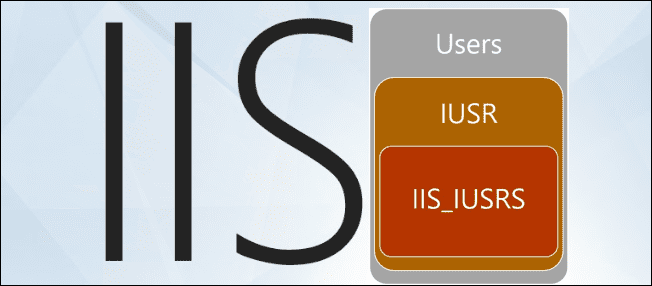
In this article, we shall discuss “How to add an account to the local IIS_IUSRS group”. IIS_IUSRS is the group for IIS Worker Process Accounts. This means the identity that the application pool itself runs under. IUSR is the anonymous user identity. That means the identity that IIS believes to be the user who is accessing the site. This user is not a member of the IIS_IUSRS group by default. Please see how to configure SSL between WSUS upstream and downstream servers, and how to perform redirection from HTTP to HTTPS.

Add Account to User Group

Kindly refer to the following related IIS guides. How to add and remove IIS Web Server on Windows Server 2019 via the Server Manager and PowerShell, and Event ID 5059: Application pool has been disabled or Changing identity user for IIS Application Pool.

I needed to have the MBAM MBAM-RO-SVC account added to the local IIS_IUSRS group. The following steps below were how I approached it.

Fire up Server Manager

Launch the Server Manager and click Tool and then on “Computer Manager.

Alternatively, you could also search from Computer Management from the start menu or from the “Windows Administrative Tools”.

Adding accounts to IIS_IUSRS

This will open the Computer Management console. Navigate to the Local Users and Groups. Click on Groups and search for IIS_IUSRS and add the service account you created for the IIS Pool.

Local IIS group management

However, the account has been added. Click on Okay to finish the set up.

Screenshot-2021-03-16-at-23.31.49

I hope you found this blog post on How to add an account to the local IIS_IUSRS group helpful. Furthermore, Please let me know in the comment session if you have any questions.

Thank you for reading this post. Kindly share it with others.

  • Share on X (Opens in new window) X
  • Share on Reddit (Opens in new window) Reddit
  • Share on LinkedIn (Opens in new window) LinkedIn
  • Share on Facebook (Opens in new window) Facebook
  • Share on Pinterest (Opens in new window) Pinterest
  • Share on Tumblr (Opens in new window) Tumblr
  • Share on Telegram (Opens in new window) Telegram
  • Share on WhatsApp (Opens in new window) WhatsApp
  • Share on Mastodon (Opens in new window) Mastodon
  • Share on Bluesky (Opens in new window) Bluesky
Windows Server Tags:IIS, Internet Information Services, Windows 10, Windows Server 2016

Post navigation

Previous Post: How to fix Remote Desktop can’t connect to the remote computer for one of these reasons
Next Post: Unable to locate the account: Fix call to DsGetDcNameWithAccount failed with return value 0x0000054B

Related Posts

  • How to determine Active Directory Site Name
    How to determine Active Directory Site Name Network | Monitoring
  • How do I disable credentials from Remote Desktop
    Disable credential Prompts for Remote Desktop Connections Windows
  • banner
    How to install and configure FSRM in Microsoft Windows Server Windows Server
  • windows10update 1
    License file was not found in the specified path (Error 0xc1570103) Windows Server
  • article 1280x720.192a2586 1 1
    Fix Error 0xc1510111: You do not have permission to mount and modify this image Windows Server
  • MECM Deployment copy
    How to install Endpoint Configuration Manager on HyperV VM Windows Server

More Related Articles

How to determine Active Directory Site Name How to determine Active Directory Site Name Network | Monitoring
How do I disable credentials from Remote Desktop Disable credential Prompts for Remote Desktop Connections Windows
banner How to install and configure FSRM in Microsoft Windows Server Windows Server
windows10update 1 License file was not found in the specified path (Error 0xc1570103) Windows Server
article 1280x720.192a2586 1 1 Fix Error 0xc1510111: You do not have permission to mount and modify this image Windows Server
MECM Deployment copy How to install Endpoint Configuration Manager on HyperV VM Windows Server

Leave a Reply Cancel reply

You must be logged in to post a comment.

Microsoft MVP

VEEAMLEGEND

vexpert-badge-stars-5

Virtual Background

GoogleNews

Categories

veeaam100

Veeam Vanguard

  • Dellupdate 1
    Fix for security vulnerabilities in the BIOS firmware for some Intel Processors Windows
  • Retieve BitLocker Recovery Keys from microsoft sql
    Get MBAM BitLocker Recovery Keys from Microsoft SQL Server Windows
  • Specifiy the right credential for adding a domain
    Specify user account name when adding a DC to an existing Forest Windows Server
  • mountedimagenotaccessible
    Unable to access the image: Make sure that the image path exist Windows
  • The backup was safe the data center wasnt e1781003439613
    The Backup Was Safe: The Data Center Was not: A Real-World Lesson About Hidden Data Center Risks and Governance Failures Backup
  • Create AWS RDS instance
    How to create an Amazon Relational Database Service Instance AWS/Azure/OpenShift
  • image 129
    Using Awx to deploy, schedule and run playbooks Linux
  • Screensaver
    How to Enable or Disable Screen Saver on Windows Windows

Subscribe to Blog via Email

Enter your email address to subscribe to this blog and receive notifications of new posts by email.

Join 1,762 other subscribers
  • RSS - Posts
  • RSS - Comments
  • About
  • Authors
  • Write for us
  • Contact
  • Advertise with us
  • General Terms and Conditions
  • Privacy policy
  • Feedly
  • Telegram
  • Youtube
  • Facebook
  • Instagram
  • LinkedIn
  • Tumblr
  • Pinterest
  • Twitter
  • mastodon
  • Bsky

Tags

Active Directory Azure Bitlocker Microsoft Windows PowerShell WDS Windows 10 Windows 11 Windows Deployment Services Windows Server 2016

Copyright © 2026 TechDirectArchive

Loading Comments...

You must be logged in to post a comment.