Skip to content

TechDirectArchive

Hands-on IT, Cloud, Security & DevOps Insights

  • Home
  • About
  • Advertise With US
  • Reviews
  • Contact
  • Toggle search form
Home » Windows » How to update Microsoft Defender Antivirus into the install image of Windows (install.wim)
  • How to Enable Time Limit to Disconnect Remote Desktop After Inactivity
    How to Enable Time Limit to Disconnect Remote Desktop After Inactivity Windows
  • banner
    What is Phishing Resistant Multi-Factor Authentication? Security | Vulnerability Scans and Assessment
  • screenshot 2020 04 23 at 00.30.09
    How to mount a USB Drive in Linux Linux
  • hero windowsserver hyperv
    Why does the legacy PXE not does work on Generation 2 VM Virtualization
  • active directory faq 2016 1
    How to detect who disabled a user in Active Directory Windows Server
  • check and assign privileges to a MySQL User
    How to check and assign privileges to a MySQL User Oracle/MSSQL/MySQL
  • screenshot 2020 03 01 at 21.19.07
    Various ways to hide Windows Taskbar Windows
  • ios microsoft remote desktop app
    Remote Desktop can not find the computer FQDN and this might mean that FQDN does not belong to the specified network Windows

How to update Microsoft Defender Antivirus into the install image of Windows (install.wim)

Posted on 14/09/202115/09/2023 Christian By Christian No Comments on How to update Microsoft Defender Antivirus into the install image of Windows (install.wim)
Windows Defender update

Microsoft Defender Antivirus, formerly known as Windows Defender, is an antivirus protection program that’s included with Windows 10. Unlike other antivirus programs like McAfee, Microsoft Defender is free and doesn’t require any additional installation. Therefore, in this guide, I will be showing you how to update the Windows installation image (install.wim) file with the latest security intelligence package available. Please see WDS/DHCP scenarios: How to configure DHCP Server option 60, 66, and 67 for Windows Deployment Services, Uninstall WDS: How to remove Windows Deployment Services role via the GUI and PowerShell.

After the installation of Windows 10, the built-in version of Microsoft Defender Antivirus will download and apply any recent updates automatically. But this process does not happen immediately, thereby leaving the system temporarily vulnerable to attacks during this period.

I have successfully tested this on Windows 10 Enterprise, Pro und Home-Edition and Windows Server 2016 and 2019. Here is a detailed guide on “how to install ADK, MDT, and WDS: How to deploy Windows images via Microsoft Deployment Toolkit and Windows Deployment Services“.

Install WIM File

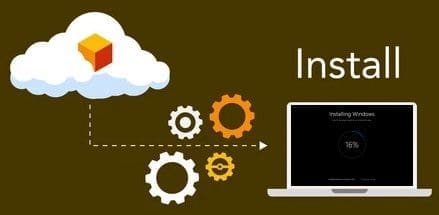
However, The install. wim file (Windows Image File) is a compressed file that contains a set of many files and associated file system metadata and is included in any Windows installation Media under the “sources” folder (sources\install.wim).

Also, see What are the differences between Capture image, Discover image, Install and Boot images (Windows PE). How to fix Action cannot be complete because the computer is open in Wimserv.

Boot WIM File

A boot image is an image we can use to boot a bare-metal system in order to begin the process of installing Windows onto the system.

Please see the following guides: Install Wim: How to Add Packages to Windows image the DISM Tool. How to add boot and install images to WDS and configure Multicast transmission via the GUI and WDSUTIL.

How to update Microsoft Defender on Windows 10 image

To update the Microsoft Defender Antivirus for system installation image. You will need to download the Microsoft Defender kit for the 64-bit version. If you are using 32-bits version of Windows 10. You can download this.

Install.wim modification

Upon download, please extract the as shown below. For more information on the differences between ADK, MDT, Microsoft Endpoint Configuration Manager (SCCM), Intune, Autopilot, and WSUS. No bootable media found system halted: Unable to PXE boot WDS to Virtualbox,

Microsoft Defender installation
Antivirus integration Windows

Next, create a temporary location, in my case, I will name it “Windefprocess”

Windows Defender update

Next, you will have to launch PowerShell, right-click the top result, and select Run administrator.

Install.wim modification

Type the following command to open the directory with the extracted files and press Enter

cd PATH\TO\DEFENDER-UPDATE-KIT
C:\Users\Christian\Documents\defender-update-kit-x64

Next, type the command to update the Microsoft Defender Antivirus inside a Windows 10 image and press Enter:

.\DefenderUpdateWinImage.ps1 -WorkingDirectory "DEFINED_TEMP-LOCATION" -Action AddUpdate -ImagePath "PATH\TO\INSTALL.WIM" -Package "PATH\TO\DEFENDER\CAB\UPDATE"
.\DefenderUpdateWinImage.ps1 -WorkingDirectory "C:\Users\Christian\Documents\Windefprocess" -Action AddUpdate -ImagePath "C:\Users\Christian\Documents\Image\install.wim" -Package "C:\Users\Christian\Documents\defender-update-kit-x64\defender-dism-x64.cab
Screenshot-2021-10-18-at-22.28.31
Screenshot-2021-10-18-at-22.28.49
Screenshot-2021-10-18-at-22.41.38

Furthermore, As you can see below, the update has been successfully applied. Now, the PowerShell script will update the Windows 10 image with the most recent platform, engine, and signature version of Microsoft Defender Antivirus as shown below.

Here are some exciting guides: How to remove Microsoft Defender update on Windows 10 and Windows Server image, MDT accidental OS deletion: Mistakenly deleted your Operating Systems over Microsoft Deployment Toolkit, and how to fix “Error 0xc1420127: The specified image in the specified wim is already mounted for read and write access“

Screenshot-2021-10-18-at-22.45.55

I hope you found this blog post helpful. If you have any questions, please let me know in the comment session.

Rate this post

Thank you for reading this post. Kindly share it with others.

  • Click to share on X (Opens in new window) X
  • Click to share on Reddit (Opens in new window) Reddit
  • Click to share on LinkedIn (Opens in new window) LinkedIn
  • Click to share on Facebook (Opens in new window) Facebook
  • Click to share on Pinterest (Opens in new window) Pinterest
  • Click to share on Tumblr (Opens in new window) Tumblr
  • Click to share on Telegram (Opens in new window) Telegram
  • Click to share on WhatsApp (Opens in new window) WhatsApp
  • Click to share on Pocket (Opens in new window) Pocket
  • Click to share on Mastodon (Opens in new window) Mastodon
  • Click to share on Bluesky (Opens in new window) Bluesky
  • Click to share on Threads (Opens in new window) Threads
  • Click to share on Nextdoor (Opens in new window) Nextdoor
Windows Tags:AntiMalware, AntiVirus, Microsoft Deployment Toolkit (MDT), Microsoft Windows, WDS, Windows 10, Windows Defender, Windows Server 2016

Post navigation

Previous Post: Automate Infrastructure Deployments in the Cloud with Ansible and Azure Pipelines
Next Post: A Brief Introduction to Linux and How to Create Disk Partition in Ubuntu Linux

Related Posts

  • fix this PC cannot run on Windows
    How to Fix “This PC Can’t Run Windows 11” on Hyper Windows
  • RecomveRDSlicense
    How to remove RDS Client Access Licenses from RDS Server Windows
  • Disable Hardware Acceleration in Browsers and Windows
    How to Disable Hardware Acceleration in Browsers and Windows Windows
  • mdtxxxxx
    Failed to run the action install Operating System: Lifetouch deployment failed, Return Code = -2147467259 0x80004005 when installing Windows image via MDT Windows
  • Featured image multi monitor
    Enhanced Multi-Monitor Experience with Windows 11 Windows
  • shut down 650x300 1
    How to prevent users from shutting down in a Virtual Machine Windows

More Related Articles

fix this PC cannot run on Windows How to Fix “This PC Can’t Run Windows 11” on Hyper Windows
RecomveRDSlicense How to remove RDS Client Access Licenses from RDS Server Windows
Disable Hardware Acceleration in Browsers and Windows How to Disable Hardware Acceleration in Browsers and Windows Windows
mdtxxxxx Failed to run the action install Operating System: Lifetouch deployment failed, Return Code = -2147467259 0x80004005 when installing Windows image via MDT Windows
Featured image multi monitor Enhanced Multi-Monitor Experience with Windows 11 Windows
shut down 650x300 1 How to prevent users from shutting down in a Virtual Machine Windows

Leave a Reply Cancel reply

You must be logged in to post a comment.

Microsoft MVP

VEEAMLEGEND

vexpert-badge-stars-5

Virtual Background

GoogleNews

Categories

veeaam100

sysadmin top30a

  • How to Enable Time Limit to Disconnect Remote Desktop After Inactivity
    How to Enable Time Limit to Disconnect Remote Desktop After Inactivity Windows
  • banner
    What is Phishing Resistant Multi-Factor Authentication? Security | Vulnerability Scans and Assessment
  • screenshot 2020 04 23 at 00.30.09
    How to mount a USB Drive in Linux Linux
  • hero windowsserver hyperv
    Why does the legacy PXE not does work on Generation 2 VM Virtualization
  • active directory faq 2016 1
    How to detect who disabled a user in Active Directory Windows Server
  • check and assign privileges to a MySQL User
    How to check and assign privileges to a MySQL User Oracle/MSSQL/MySQL
  • screenshot 2020 03 01 at 21.19.07
    Various ways to hide Windows Taskbar Windows
  • ios microsoft remote desktop app
    Remote Desktop can not find the computer FQDN and this might mean that FQDN does not belong to the specified network Windows

Subscribe to Blog via Email

Enter your email address to subscribe to this blog and receive notifications of new posts by email.

Join 1,836 other subscribers
  • RSS - Posts
  • RSS - Comments
  • About
  • Authors
  • Write for us
  • Advertise with us
  • General Terms and Conditions
  • Privacy policy
  • Feedly
  • Telegram
  • Youtube
  • Facebook
  • Instagram
  • LinkedIn
  • Tumblr
  • Pinterest
  • Twitter
  • mastodon

Tags

Active Directory AWS Azure Bitlocker Microsoft Windows PowerShell WDS Windows 10 Windows 11 Windows Server 2016

Copyright © 2025 TechDirectArchive


Loading Comments...
 

You must be logged in to post a comment.