Skip to content

TechDirectArchive

Hands-on IT, Cloud, Security & DevOps Insights

  • Home
  • About
  • Advertise With US
  • Reviews
  • Contact
  • Toggle search form
Home » Windows » How to change the default RDP port in Windows

How to change the default RDP port in Windows

Posted on 27/08/202225/03/2024 Temitope Odemo By Temitope Odemo No Comments on How to change the default RDP port in Windows
rdp4

Remote Desktop Protocol is used by Windows users to connect remotely to another computer. By default, the RDP port is 3389 and sometimes you may want to change this port and assign another port for the RDP. In this article, we shall discuss how to change the default RDP port in Windows. If you want to read more on Remote Desktop Protocol you can check these: How to Resolve Microsoft RDP Connection Black Screen if the account is not authorized. Also, see how to fix “The connection was denied because the user account is not authorized for remote login: How to add and remove Remote Desktop Users“.

Here are some more guides you may be interested in: Remote Desktop cannot find the computer this in the specified network: Verify the computer name and domain that you are trying to connect. Here is a live demonstration on YouTube on how this can be done.

In this guide, we will be using the Registry Editor to make the changes to the RDP port. But you have to be very careful when you are using the Registry Editor because if not handled properly can cause permanent damage to the system.

But why do we want to change the Default RDP Port?

Everyone knows that Microsoft uses the standard port 3389 for all remote connections. This is to the bad actor’s advantage because they are always trying to access people’s systems without their knowledge. So changing this default port to another open port will make it much harder for an attacker to easily break into your system.

Please see Error 0x204: How to fix Remote Desktop Connection issues if you want to view or remove RDP History. See how to view Remote Desktop connection history or remove server connection entries from RDP.

Steps to change the Default Remote Desktop Port

To do this, please open the Registry Editor
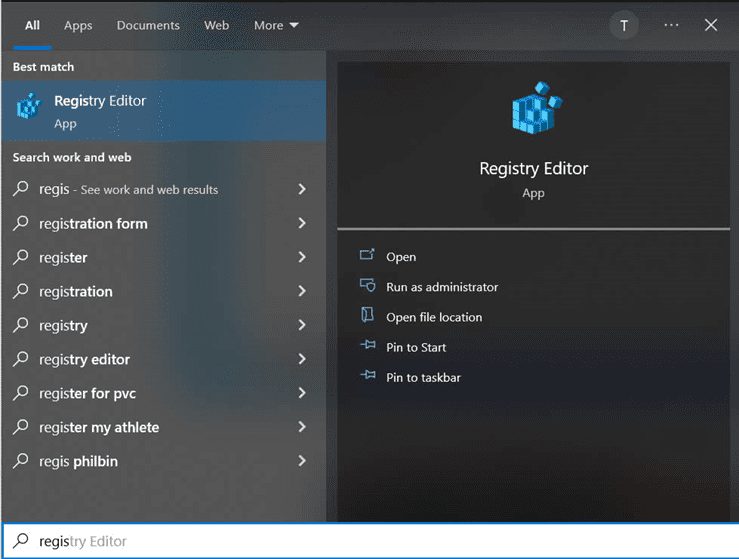
image-16
Registry Editor

You can also run the regedit command. Also, see Copy Deployment Share between Servers without using linked Deployment Shares.
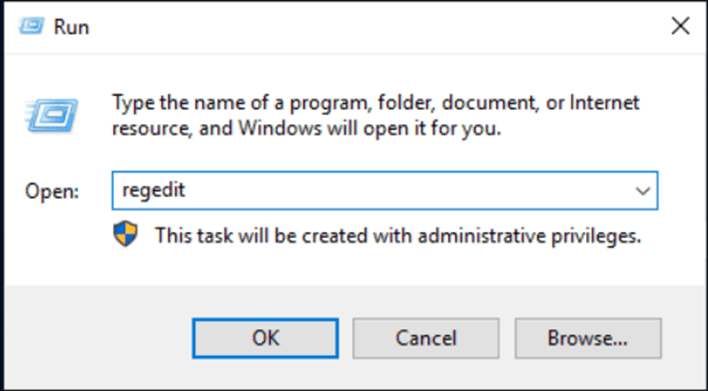
image-17
regedit

2. Browse to this key KEY_LOCAL_MACHINE\System\CurrentControlSet\Control\Terminal Server\WinStations\RDP-Tcp
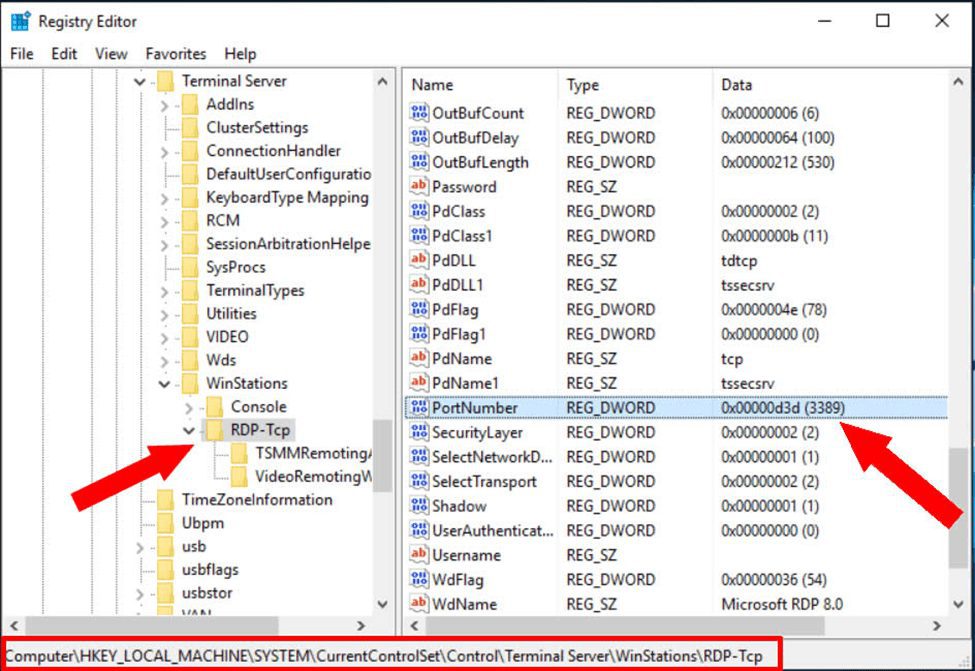
image-18
Registry Editor

3. Click on the PortNumber and click Decimal option button. In the Value data field enter the new port number and click OK to save the changes. In this guide I will be changing 3389 to 3333.
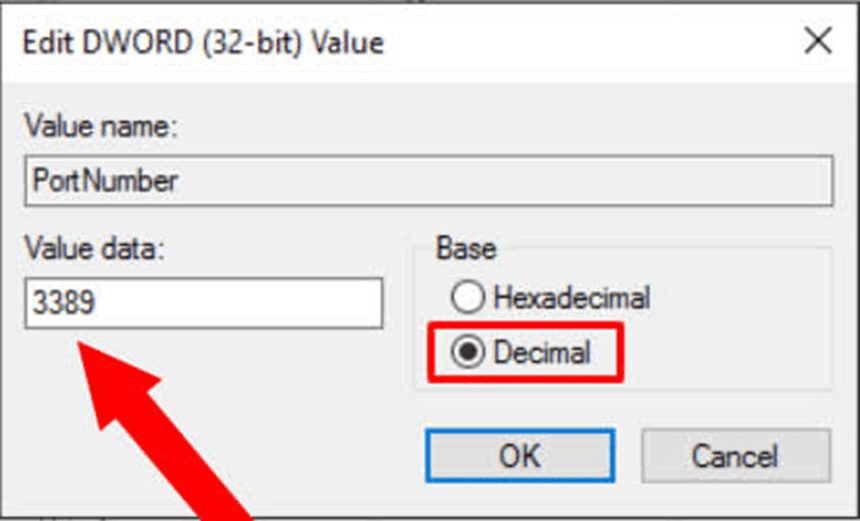
image-19
Editing PortNumber

Please see How to remove saved RDP connections in Windows, How to fix Remote Desktop can’t connect to the remote computer for one of these reasons, and How to configure a console port password on Cisco Router / Switch Configuration.

Verify Port change via PowerShell

You can confirm if the port has actually been changed using this command on PowerShell.

Get-ItemProperty -Path ‘HKLM:\SYSTEM\CurrentControlSet\Control\Terminal Server\WinStations\RDP-Tcp’ -name “PortNumber”

Run it on Windows PowerShell and you will see the RDP Port has now changed to 3333
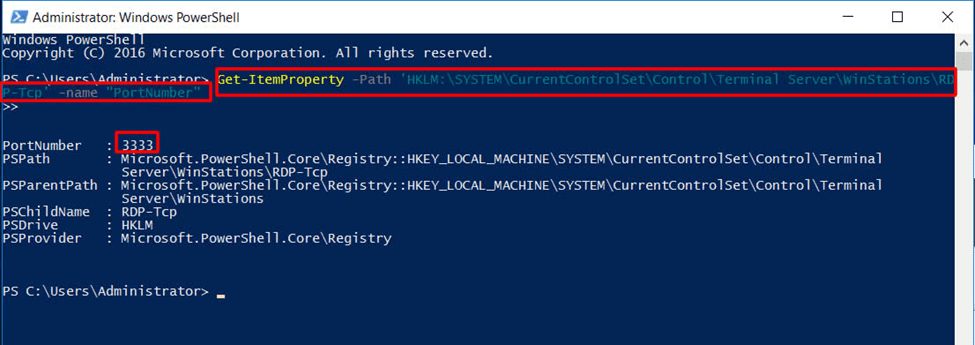
image-20
Windows PowerShell

Another thing you will need to do is to open the ports. This is because if you try to RDP using this port may not work at first until you open it.

And also How to allow saved credentials for RDP connection. And What to do when your Remote Desktop Licensing Manager Server Crashes.

I hope you found this blog post on how to change the default RDP port in Windows Interesting and helpful. In case you have any questions do not hesitate to ask in the comment section.

Rate this post

Thank you for reading this post. Kindly share it with others.

  • Share on X (Opens in new window) X
  • Share on Reddit (Opens in new window) Reddit
  • Share on LinkedIn (Opens in new window) LinkedIn
  • Share on Facebook (Opens in new window) Facebook
  • Share on Pinterest (Opens in new window) Pinterest
  • Share on Tumblr (Opens in new window) Tumblr
  • Share on Telegram (Opens in new window) Telegram
  • Share on WhatsApp (Opens in new window) WhatsApp
  • Share on Mastodon (Opens in new window) Mastodon
  • Share on Bluesky (Opens in new window) Bluesky
  • Share on Threads (Opens in new window) Threads
  • Share on Nextdoor (Opens in new window) Nextdoor
Network | Monitoring, Windows, Windows Server Tags:Hyper-V, hyperV, Microsoft Windows, RDP, Remote Access, Remote Desktop Protocol, RemoteConnection, Windows 10, Windows 11, Windows Server 2016

Post navigation

Previous Post: How to clear cache in Windows 11
Next Post: How to demote and remove a Domain Controller on Windows Servers

Related Posts

  • Certificate does not contain the private key
    Server Certificate could not be updated: Private key does not match Windows Server
  • Enable autologon and autostart for user session
    Enable Autologon and Autostart for user session Windows
  • SystoLOCK Passwordless Authentication
    Protect your Windows Devices with MFA with SystoLOCK Security | Vulnerability Scans and Assessment
  • fix Client Certificate Mapping Authentication error
    How to fix Client Certificate Mapping Authentication error Backup
  • Featured post
    Installing Windows Subsystem for Android (WSA) Windows
  • How to Set up a Single Site to Site VPN Connection on AWS
    Setup a Site-to-Site VPN Connection on AWS AWS/Azure/OpenShift

More Related Articles

Certificate does not contain the private key Server Certificate could not be updated: Private key does not match Windows Server
Enable autologon and autostart for user session Enable Autologon and Autostart for user session Windows
SystoLOCK Passwordless Authentication Protect your Windows Devices with MFA with SystoLOCK Security | Vulnerability Scans and Assessment
fix Client Certificate Mapping Authentication error How to fix Client Certificate Mapping Authentication error Backup
Featured post Installing Windows Subsystem for Android (WSA) Windows
How to Set up a Single Site to Site VPN Connection on AWS Setup a Site-to-Site VPN Connection on AWS AWS/Azure/OpenShift

Leave a Reply Cancel reply

You must be logged in to post a comment.

Microsoft MVP

VEEAMLEGEND

vexpert-badge-stars-5

Virtual Background

GoogleNews

Categories

veeaam100

Veeam Vanguard

  • VHR upgrade
    Upgrade legacy VHR to Veeam Infrastructure Hardened Repository Backup
  • Set Microsoft Defender AV to Passive mode on a Windows Server
    Set Microsoft Defender AV to Passive mode on a Windows Server Security | Vulnerability Scans and Assessment
  • Featured image 4
    How to remove a Device from your Microsoft Account Microsoft Exchange/Office/365
  • csdfg
    What is Cortona: How to disable Cortana via the registry or GPO Windows
  • article 1280x720.166f8634
    How to install DHCP role on Windows Server 2019 Windows Server
  • ADUC Appcrash fix
    Faulting Application Name: mmc.exe: Unable to launch ADUC Windows Server
  • logon failure and requested session denied
    Logon Failure: User has not been granted the requested logon type Windows
  • Feature post
    Disable Bing Search in Windows: Quick Guide for Windows Windows

Subscribe to Blog via Email

Enter your email address to subscribe to this blog and receive notifications of new posts by email.

Join 1,808 other subscribers
  • RSS - Posts
  • RSS - Comments
  • About
  • Authors
  • Write for us
  • Advertise with us
  • General Terms and Conditions
  • Privacy policy
  • Feedly
  • Telegram
  • Youtube
  • Facebook
  • Instagram
  • LinkedIn
  • Tumblr
  • Pinterest
  • Twitter
  • mastodon

Tags

AWS Azure Bitlocker Microsoft Windows PowerShell WDS Windows 10 Windows 11 Windows Deployment Services Windows Server 2016

Copyright © 2025 TechDirectArchive


Loading Comments...
 

You must be logged in to post a comment.