Skip to content

TechDirectArchive

Hands-on IT, Cloud, Security, Veeam & DevOps

  • Home
  • About
  • Advertise With US
  • Reviews
  • Contact
  • Toggle search form
  1. Home
  2. Breadcrumb-Yoast

[wpseo_breadcrumb]

How to install WireShark on a Linux Ubuntu System

Posted on 28/09/202215/07/2023 Raphael Gab-Momoh By Raphael Gab-Momoh No Comments on How to install WireShark on a Linux Ubuntu System
  1. Home
  2. Linux
  3. How to install WireShark on a Linux Ubuntu System
WireShark

Wireshark is a free and open-source packet analyzer. In addition, it is utilized for network troubleshooting, analysis, software development, communications protocol development, and instruction. Whether you’re a network administrator, developer, or security professional, installing Wireshark on your system will provide valuable insights into your network’s activities This article will show you how to install Wireshark on Linux. The commands will also work for older versions of Ubuntu as well. Other valuable articles can be found here: How to Install PlayonLinux on a Linux System and How to install Windows Server 2022 on VirtualBox and How to Set Up and Use an Upstream Branch in Git andHow to install and Uninstall Discord in a Linux System and How to install Unison on a Linux System also How to install Redis on a Linux System.

Prerequisites to Install Wireshark on Linux

  1. Ubuntu machine any version from 14.01 but for this exercise, we shall be using 22.04
  2. A user account with sudo privileges
  3. Command line interface

To install Wireshark on Linux, follow the steps below:

Step1. Update Package Index and System Dependencies

Run the following command on command line to update the core libraries:

sudo apt update 
How to install WireShark on a Linux-packagesu
packages

Step2: Install Wireshark on Linux

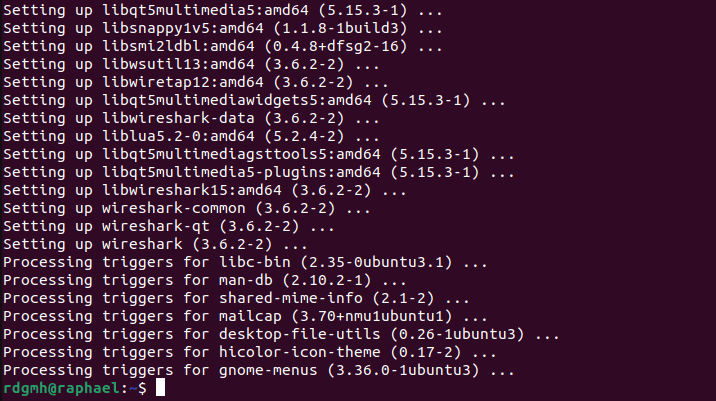
Run the following command on command line to install wireshark on ubuntu system:

sudo apt install wireshark

When prompted for a yes or a no, leave it in the default settings.

How to install WireShark on a Linux-promo
wireshark configuration
How to install WireShark on a Linux-wireshack-installation-complete
wireshark installation complete

Step3: Verify Wireshark Installation on Linux Ubuntu

Use the command line to check if Wireshark was successfully installed on Ubuntu 22.04:

wireshark --version
wirev
wireshark version

Step4: Launch Wireshark

After installation, proceed to launch Wireshark on Ubuntu system. Thus, by default, Wireshark requires root privileges to capture network traffic. However, running Wireshark with root permissions is not recommended due to security concerns. To allow non-root users to capture packets, you need to grant them the necessary permissions.

Run the following command on command line to launch Wireshark on Ubuntu:

sudo wireshark
launw
wireshark launched

Step5 : Uninstall Wireshark

Run the following command on command line to remove Wireshark from Ubuntu:

removed
wireshark removed

Summary

In conclusion, by following the steps above, you’ll be able to install Wireshark on your Linux successfully.

Rate this post

Thank you for reading this post. Kindly share it with others.

  • Share on X (Opens in new window) X
  • Share on Reddit (Opens in new window) Reddit
  • Share on LinkedIn (Opens in new window) LinkedIn
  • Share on Facebook (Opens in new window) Facebook
  • Share on Pinterest (Opens in new window) Pinterest
  • Share on Tumblr (Opens in new window) Tumblr
  • Share on Telegram (Opens in new window) Telegram
  • Share on WhatsApp (Opens in new window) WhatsApp
  • Share on Mastodon (Opens in new window) Mastodon
  • Share on Bluesky (Opens in new window) Bluesky
  • Share on Threads (Opens in new window) Threads
  • Share on Nextdoor (Opens in new window) Nextdoor
Linux

Post navigation

Previous Post: How to Install PlayonLinux on a Linux System
Next Post: How to Install and Uninstall Yarn on Ubuntu Linux

Related Posts

  • selinux in production
    How to locate directory file context and restore it with SELinux Linux
  • Errno 256 No more mirrors to try 1
    How to solve Errno 256 Linux
  • dns
    How to setup a cache-only DNS server Linux
  • feature image
    How to install PostgreSQL on Ubuntu Linux
  • whois4578uh
    How to get Domain information using WHOIS Command in Linux Linux
  • Screenshot 2024 02 28 at 11.17.41 PM
    GitHub Pages Deployment Guide Linux

More Related Articles

selinux in production How to locate directory file context and restore it with SELinux Linux
Errno 256 No more mirrors to try 1 How to solve Errno 256 Linux
dns How to setup a cache-only DNS server Linux
feature image How to install PostgreSQL on Ubuntu Linux
whois4578uh How to get Domain information using WHOIS Command in Linux Linux
Screenshot 2024 02 28 at 11.17.41 PM GitHub Pages Deployment Guide Linux

Leave a Reply Cancel reply

You must be logged in to post a comment.

Microsoft MVP

VEEAMLEGEND

vexpert-badge-stars-5

Virtual Background

GoogleNews

Categories

veeaam100

Veeam Vanguard

  • rdp5
    Change expired RDP Password: How to change a password on a Remote Desktop session Windows Server
  • vmca course
    Veeam Certified Architect: VMCA Training & Certification Review Backup
  • keyvault
    How To Use Azure Key Vault Secrets in Azure Pipelines AWS/Azure/OpenShift
  • dns error
    Domain Name System Protocol: Client Registration Issue Windows Server
  • windows update 03
    How to automate Windows Update with PowerShell Scripts
  • Assigned Access
    Single App Kiosk Mode: Assigned Access using Local Settings Windows
  • Featured image 1
    How to Share Microsoft Outlook Calendar on Desktop and on Web Microsoft Exchange/Office/365
  • screenshot 2020 03 18 at 23.03.42
    Enable God Mode via PowerShell or the CLI and GUI Windows

Subscribe to Blog via Email

Enter your email address to subscribe to this blog and receive notifications of new posts by email.

Join 1,803 other subscribers
  • RSS - Posts
  • RSS - Comments
  • About
  • Authors
  • Write for us
  • Advertise with us
  • General Terms and Conditions
  • Privacy policy
  • Feedly
  • Telegram
  • Youtube
  • Facebook
  • Instagram
  • LinkedIn
  • Tumblr
  • Pinterest
  • Twitter
  • mastodon

Tags

AWS Azure Bitlocker Microsoft Windows PowerShell WDS Windows 10 Windows 11 Windows Deployment Services Windows Server 2016

Copyright © 2025 TechDirectArchive

Loading Comments...

You must be logged in to post a comment.