Skip to content

TechDirectArchive

Hands-on IT, Cloud, Security & DevOps Insights

  • Home
  • About
  • Advertise With US
  • Reviews
  • Contact
  • Toggle search form
Home » Windows » How To Configure a Domain Password Policy

How To Configure a Domain Password Policy

Posted on 30/10/202201/12/2023 Temitope Odemo By Temitope Odemo No Comments on How To Configure a Domain Password Policy
domain14-1

Microsoft Active Directory always comes with a default domain password that defines the password requirements like length, age, characters, and many more. This password policy is configured and linked to the root of the domain and affects every user on the domain. This guide is going to show you how you can change that default value to the value you want. You may want to know How to Block downloads on Microsoft Edge using GPO on Windows Server . This is How to allow RDP access for non-administrators on a Domain Controller. This guide discusses how To Configure a Domain Password Policy.

Here is a YouTube video showing the following steps on how to configure a Domain Password Policy as well.

Configure a Domain Password Policy

Now to get to the password policy section do the following:

1. Open the group policy management console by starting a Command Prompt or Run, and then type: gpmc.msc
2.  Expand Domains, your domain, and the group policy objects
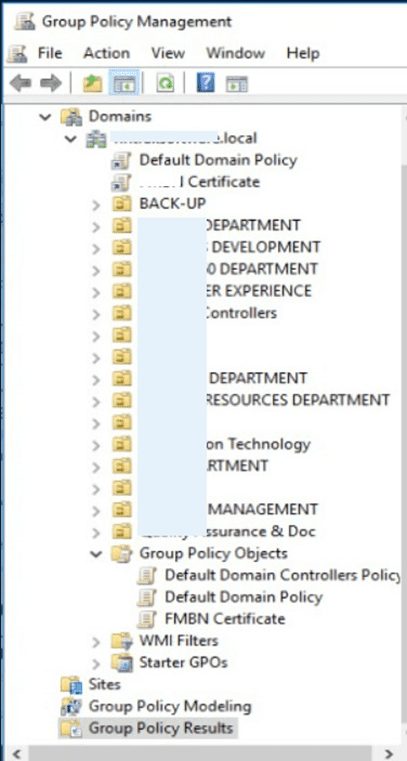
image-66

3. Now right-click the default domain policy and click edit
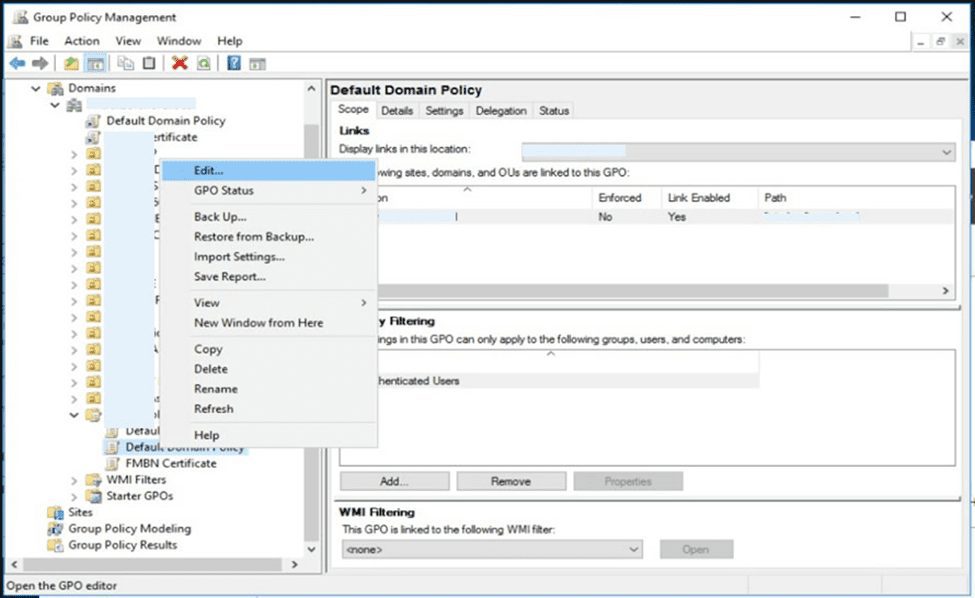
image-67

4. Now navigate to Computer Configuration>Policies>Windows Settings>Security Settings>Account Policies>Password Policy

This will show you the current default password policy.
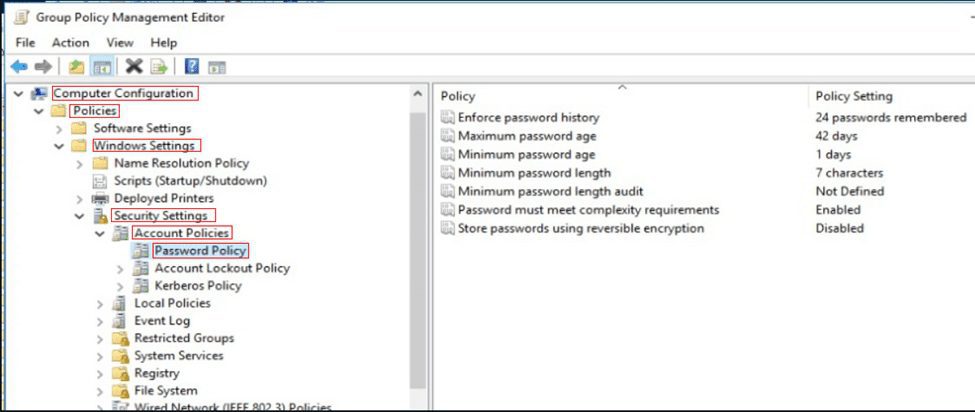
image-68

5. You can also use this command Get-ADDefaultDomainPasswordPolicy  on Powershell to view the default settings.
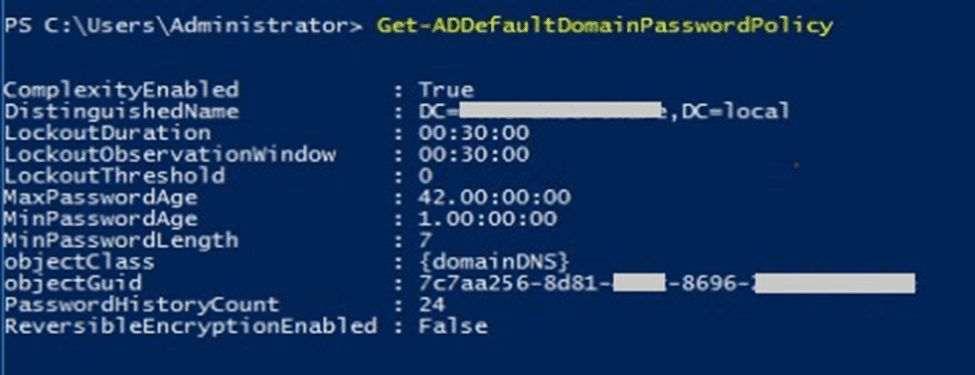
image-69

6. To edit you will need to double-click on each setting. Let us double-click on the Minimum password length and adjust it from the default of 7 to 10. Click OK to apply.

You can change any of the default settings and apply it.

image-70

Note: it is not recommended to create a new GPO and link to an organization unit and if you want to apply a different password policy to domain users the best practice is to use a fine-grained password policy.

I hope you found this blog post on How To Configure a Domain Password Policy interesting and helpful. In case you have any questions do not hesitate to ask in the comment section.

5/5 - (1 vote)

Thank you for reading this post. Kindly share it with others.

  • Share on X (Opens in new window) X
  • Share on Reddit (Opens in new window) Reddit
  • Share on LinkedIn (Opens in new window) LinkedIn
  • Share on Facebook (Opens in new window) Facebook
  • Share on Pinterest (Opens in new window) Pinterest
  • Share on Tumblr (Opens in new window) Tumblr
  • Share on Telegram (Opens in new window) Telegram
  • Share on WhatsApp (Opens in new window) WhatsApp
  • Share on Mastodon (Opens in new window) Mastodon
  • Share on Bluesky (Opens in new window) Bluesky
  • Share on Threads (Opens in new window) Threads
  • Share on Nextdoor (Opens in new window) Nextdoor
Windows, Windows Server Tags:Domain, Domain Controller, Group Policy Management Console, Microsoft Windows, Windows 11, Windows Server 2016

Post navigation

Previous Post: Virtual Machine Scale Set: Demonstrating High Availability in Azure
Next Post: Run MBR and GPT conversion with the best GPT converter

Related Posts

  • msinfo32 thumbnail
    How to use MSINFO32 to view System Information Windows
  • Migrate from SQL Database
    Migrate Veeam One Database from SQL Server 2017 to 2025 Backup
  • win10 usb
    How to prevent installation of removable devices Windows
  • Featured image Chrome notification
    How to Disable Chrome Browser Notifications on Windows Windows
  • spell
    Disable Cloud-Based Spell Checker in Microsoft Edge and Google Chrome Windows
  • image 37
    There was an error opening the Trusted Platform Module snap-in: You do not have permission to open the Trusted Platform Module Console Windows

More Related Articles

msinfo32 thumbnail How to use MSINFO32 to view System Information Windows
Migrate from SQL Database Migrate Veeam One Database from SQL Server 2017 to 2025 Backup
win10 usb How to prevent installation of removable devices Windows
Featured image Chrome notification How to Disable Chrome Browser Notifications on Windows Windows
spell Disable Cloud-Based Spell Checker in Microsoft Edge and Google Chrome Windows
image 37 There was an error opening the Trusted Platform Module snap-in: You do not have permission to open the Trusted Platform Module Console Windows

Leave a Reply Cancel reply

You must be logged in to post a comment.

Microsoft MVP

VEEAMLEGEND

vexpert-badge-stars-5

Virtual Background

GoogleNews

Categories

veeaam100

Veeam Vanguard

  • Schedule and join Teams Meeting
    How to schedule and join meetings with Microsoft Teams JIRA|Confluence|Apps
  • How to Completely Uninstall Norton Security
    How to remove Norton from Mac using the RemoveNortonMacFiles tool Anti-Virus Solution
  • Screenshot
    How to configure Synology Active Insights Network | Monitoring
  • Fatory Reset Or Reinatall Windows Server
    Reset or reinstall Windows Server without deleting the VM Windows Server
  • rdp error
    The connection was denied because the user account is not authorized for remote login: How to add and remove Remote Desktop Users Windows
  • Leave Slack
    How to remove a user from a Slack Channel JIRA|Confluence|Apps
  • checkmk
    Perform System Monitoring with CheckMK Reviews
  • OpenSSL on Windows
    How to Install OpenSSL on Windows Computers Windows

Subscribe to Blog via Email

Enter your email address to subscribe to this blog and receive notifications of new posts by email.

Join 1,808 other subscribers
  • RSS - Posts
  • RSS - Comments
  • About
  • Authors
  • Write for us
  • Advertise with us
  • General Terms and Conditions
  • Privacy policy
  • Feedly
  • Telegram
  • Youtube
  • Facebook
  • Instagram
  • LinkedIn
  • Tumblr
  • Pinterest
  • Twitter
  • mastodon

Tags

AWS Azure Bitlocker Microsoft Windows PowerShell WDS Windows 10 Windows 11 Windows Deployment Services Windows Server 2016

Copyright © 2025 TechDirectArchive


Loading Comments...
 

You must be logged in to post a comment.