Skip to content

TechDirectArchive

Hands-on IT, Cloud, Security & DevOps Insights

  • Home
  • About
  • Advertise With US
  • Contact
  • Reviews
  • Toggle search form
Home » Windows Server » How does Key Rotation work in MBAM?

How does Key Rotation work in MBAM?

Posted on 09/11/202309/11/2023 Christian By Christian No Comments on How does Key Rotation work in MBAM?
How does key rotation work in MBAM

Key Rotation in Microsoft BitLocker Administration and Monitoring (MBAM) refers to the process of rotating the encryption keys used to protect BitLocker-encrypted drives. This is a security best practice to minimize the risk associated with long-term exposure to a single encryption key. In this article, we shall discuss How does Key Rotation work in MBAM. Please see how to Fix WDAC vulnerabilities by updating PowerShell, and How to deploy MBAM for Bitlocker Administration.

Key rotation helps enhance the overall security posture of the BitLocker deployment. It does this by limiting the time window during which an attacker could potentially exploit a compromised key. See how to Backup existing and new BitLocker Recovery Keys to Active Directory.

How exactly does the recovery work?

When the recovery is performed via the MBAM Helpdesk portal. The MBAM agent on the client’s computer will force it to rotate (meaning, the keys are rotated). That is, the Recovery Key and Recovery Key ID will be rotated.

Helpdesk BitLocker drive recovery

Note: Disclosing the Recovery Key using self-service does not cause the key to rotate.

But when it is pulled from Active Directory. MBAM does not know about this request and the rotation will also not happen. For accountability (audit), BitLocker recovery should not be done over Active Directory. Want to learn how to Disable BitLocker on Windows 10

You will be able to verify this change very quickly by using the following command below. These new values are escrowed to the MBAM database based on the configured policy or to the ConfigMgr (SCCM) database in SQL.

manage-bde -protectors -get C:
manage bde getprotectors BitLocker

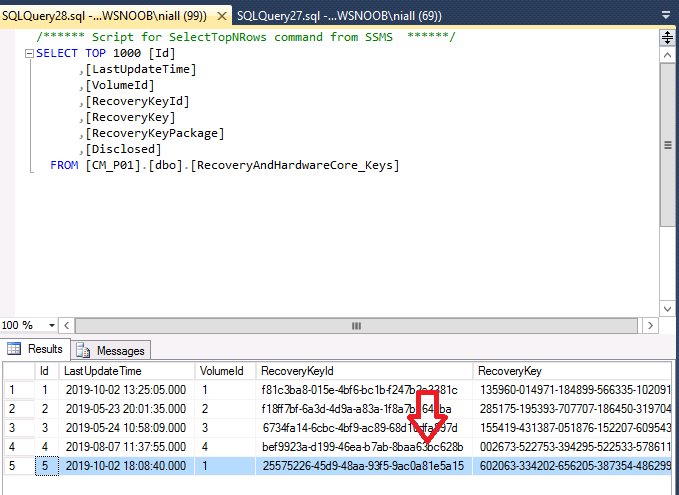
Once the key has been disclosed in MBAM DB, it changes from “0” to “1”. Then the MBAM agent on the client’s computer will force it to rotate. You can see the new recovery ID and recovery password on the host below.

RecoveryAndHardwareCore_Keys-from-MBAM-DB-and-Event-Viewer-

Note: I recommend implementing a backup of BitLocker recovery keys to Active Directory. In this way, you will avoid a single point of failure.

Regular audits and monitoring of key recovery activities in MBAM contribute to maintaining a robust and secure BitLocker deployment.

You may be interested in these: How to check if Microsoft BitLocker Administration and Monitoring is installed on Windows, how to Use Logrotate For Managing Log Files In Ubuntu Linux, and MBAM Frequent Report Errors: Understanding Microsoft BitLocker Administration and Monitoring compliance state and error status.

FAQs on Microsoft BitLocker Administration and Monitoring

Why is Key Rotation Important?

Key Rotation is crucial for maintaining the security of BitLocker-encrypted devices over time. It helps mitigate the impact of potential key compromise scenarios, such as insider threats or exposure to unauthorized access. By changing keys at regular intervals, organizations can reduce the risk associated with static encryption keys and enhance the overall resilience of their data protection strategy.

How Does Key Rotation Work in MBAM?

Key Rotation involves generating a new set of cryptographic keys for each BitLocker-protected drive and updating the corresponding recovery information stored in the MBAM database. MBAM provides an automated process for key rotation. Ensuring that the encryption keys are rotated when retrieved by the helpdesk without requiring manual intervention. The rotation process includes the generation of new BitLocker recovery keys and the storage of these keys in the MBAM Database for future retrieval.

You may want to see how MBAM Key Rotation works in MBAM integrated with SCCM, and What happens when WDS and DNS are installed on the same Windows Server? DNS issues with WDS.

I hope you found this article on how Key Rotation works in MBAM useful. Please let me know in the comment section if you have any questions.

Rate this post

Thank you for reading this post. Kindly share it with others.

  • Share on X (Opens in new window) X
  • Share on Reddit (Opens in new window) Reddit
  • Share on LinkedIn (Opens in new window) LinkedIn
  • Share on Facebook (Opens in new window) Facebook
  • Share on Pinterest (Opens in new window) Pinterest
  • Share on Tumblr (Opens in new window) Tumblr
  • Share on Telegram (Opens in new window) Telegram
  • Share on WhatsApp (Opens in new window) WhatsApp
  • Share on Mastodon (Opens in new window) Mastodon
  • Share on Bluesky (Opens in new window) Bluesky
  • Share on Threads (Opens in new window) Threads
  • Share on Nextdoor (Opens in new window) Nextdoor
Oracle/MSSQL/MySQL, Windows Server Tags:Bitlocker, MBAM, Microsoft BitLocker Administration and Monitoring, Microsoft BitLocker Administration and Monitoring (MBAM), Microsoft Windows, Windows 10, Windows 11, Windows Server 2016

Post navigation

Previous Post: Register Devices to Intune and EntraID Using Company Portal
Next Post: How to Create Hyper-V Virtual Switch

Related Posts

  • ftpwindows
    How to install and configure an FTP server on Windows 10 Windows Server
  • RDS Collection 1
    How to add and remove RDS Collection Windows
  • Uninstall MicrosoftDefenderUpdate
    What you need to know about Microsoft Defender Antivirus Security | Vulnerability Scans and Assessment
  • images 3 4
    Fix an appropriate resource file could not be found for the file for BitLocker Management Windows Server
  • Screenshot 2020 05 16 at 15.33.24
    How to install Telnet via the command line Windows Server
  • acctlockout 1
    Configure Local Administrators Account lockout Windows

More Related Articles

ftpwindows How to install and configure an FTP server on Windows 10 Windows Server
RDS Collection 1 How to add and remove RDS Collection Windows
Uninstall MicrosoftDefenderUpdate What you need to know about Microsoft Defender Antivirus Security | Vulnerability Scans and Assessment
images 3 4 Fix an appropriate resource file could not be found for the file for BitLocker Management Windows Server
Screenshot 2020 05 16 at 15.33.24 How to install Telnet via the command line Windows Server
acctlockout 1 Configure Local Administrators Account lockout Windows

Leave a Reply Cancel reply

You must be logged in to post a comment.

Microsoft MVP

VEEAMLEGEND

vexpert-badge-stars-5

Virtual Background

GoogleNews

Categories

veeaam100

Veeam Vanguard

  • Webp.net resizeimage 7
    Create a new Azure Disk: How to create and attach an extra Disk to Azure Virtual Machine AWS/Azure/OpenShift
  • screenshot 2020 03 13 at 20.24.17
    How to install additional packages via Cygwin Windows Server
  • tpmbiosactivation
    Enable TPM: Determine if TPM is present Windows
  • 1 WeXxkEX0JG3oB781HD8Hrg 1
    Post OS installation: Configure the properties of Windows Server Windows Server
  • Perform Site Maintenance or reset this site greyed out
    Fix “Perform Site Maintenance or reset this site” greyed out Windows Server
  • zabbix
    Monitoring services using Zabbix Linux
  • VMware Tools
    How to upgrade VMware Tools in vSphere Virtualization
  • Install VRO License
    How to replace Veeam Recovery Orchestrator License Backup

Subscribe to Blog via Email

Enter your email address to subscribe to this blog and receive notifications of new posts by email.

Join 1,814 other subscribers
  • RSS - Posts
  • RSS - Comments
  • About
  • Authors
  • Write for us
  • Advertise with us
  • General Terms and Conditions
  • Privacy policy
  • Feedly
  • Telegram
  • Youtube
  • Facebook
  • Instagram
  • LinkedIn
  • Tumblr
  • Pinterest
  • Twitter
  • mastodon

Tags

Active Directory Azure Bitlocker Microsoft Windows PowerShell WDS Windows 10 Windows 11 Windows Deployment Services Windows Server 2016

Copyright © 2025 TechDirectArchive