Skip to content

TechDirectArchive

Hands-on IT, Cloud, Security, Veeam & DevOps

  • Home
  • About
  • Advertise With US
  • Reviews
  • Tech News
  • Contact
  • Toggle search form

How to configure a service account for Kerberos delegation

Posted on 17/03/202106/09/2023 IT Expert By IT Expert 1 Comment on How to configure a service account for Kerberos delegation
  1. Home
  2. Windows Server
  3. How to configure a service account for Kerberos delegation
Kerberos authentication

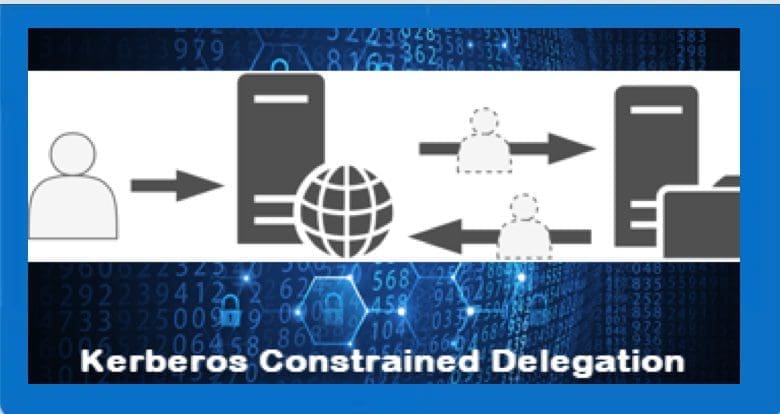
Kerberos is a network authentication protocol. It is designed to provide strong authentication for client/server applications by using secret-key cryptography. Kerberos delegation is to enable an application to access resources hosted on a different server t. For some related content on Active Directory, see the following guides. The sign-in method you are trying to use is not allowed, Active Directory Authentication methods: Kerberos and NTLM, Concept of AD Computer Account, how to create a contact in AD, and for a detailed list of articles on Active Directory, visit the following link, Enable Active Directory Recycle Bin: How to delete and restore objects using Active Directory Administrative Center, How to fix insufficient access right to perform this operation when trying to enable Active Directory Recycle Bin.

You may have so many reasons to configure delegation for Kerberos authentication. For me, I had wanted to test MBAM 2.0 but later decided to install MBAm 2.5 with SP1 and therefore had no need to configure Kerberos delegation. Regardless, I decided to describe the steps here for your need 🙂 The following are the types of delegation. (1) Unconstrained delegation (2) Constrained delegation and (3) RBCD (Resource Based Constrained Delegation. Kindly take a look at this guide “” for more information.

Configure a service account for Kerberos delegation

Furthermore, If you wish to configure constrained delegation when you are using MBAM 2.5 only, please see this link.
– Navigate to Active Directory Users and Computers, click on the right container housing the account (service account), and
– Moreover, Find the app pool credentials (in my case a service account named MBAM-IISAP-SVC),
– Right-click, and go to properties.

Service account setup

– In addition, Click the delegation, and click on the option to trust the user for delegation to any (Kerberos only) and click on OK.
Note: If you do want to trust this user to any services, Please select "Trust this user for delegation to the specified services only" and
- Add the service.

Security permissions for service accounts

That is all that you need to do to configure Kerberos delegation for a user account (service account).You may also want to visit the following interesting articles. What are the merits and demerits of Local System Account and Service Logon Account, how to delete and restore objects using Active Directory Administrative Center, and what are the differences between an Active Directory contact and a user account object?

Alternatively, you could use Active Directory Administrative Center. Here you will have to 
- Launch the Active Directory Administrative Center as shown below
Service account setup

Locate the container (OU) that the service account or user account is located in and right click on the user.
– Alternatively, you could click on Properties to display the user account properties”.

Screenshot-2021-03-17-at-19.32.23

– Click the delegation, and click on the option to trust the user for delegation to any (Kerberos only) and click on OK.
Note: If you do want to trust this user to any services, Please select "Trust this user for delegation to the specified services only" and
- Add the service.

Screenshot-2021-03-17-at-19.47.55

I hope you found this blog post helpful. If you have any questions, please let me know in the comment session.

Rate this post

Thank you for reading this post. Kindly share it with others.

  • Share on X (Opens in new window) X
  • Share on Reddit (Opens in new window) Reddit
  • Share on LinkedIn (Opens in new window) LinkedIn
  • Share on Facebook (Opens in new window) Facebook
  • Share on Pinterest (Opens in new window) Pinterest
  • Share on Tumblr (Opens in new window) Tumblr
  • Share on Telegram (Opens in new window) Telegram
  • Share on WhatsApp (Opens in new window) WhatsApp
  • Share on Mastodon (Opens in new window) Mastodon
  • Share on Bluesky (Opens in new window) Bluesky
  • Share on Threads (Opens in new window) Threads
  • Share on Nextdoor (Opens in new window) Nextdoor
Windows Server Tags:Active Directory, Active Directory Administrative Center, Active Directory Domain Services, Kerberos, Windows 10

Post navigation

Previous Post: Unable to install Microsoft Bitlocker Administration: Uninstall your current version of MBAM and run setup again
Next Post: How to deploy MBAM for BitLocker Administration

Related Posts

  • How to configure Volume Shadow Copies VSS on Windows Server
    Volume Shadow Copies: How to configure VSS on Windows Server Windows
  • unnamed 1
    NSlookup Displays Error: UnKnown Default Server Windows Server
  • DC Name
    Install and configure Active Directory Domain Services on Windows Server Windows
  • create a two way Active Directory Trust
    How to create a two-way Active Directory Trust Windows Server
  • Screenshot 2020 09 19 at 02.22.42
    Remove Windows 10 Apps with DISM: How to remove pre-provisioned apps from Windows Image Windows Server
  • How To Update WinPE Boot Images With Windows UEFI CA Cert
    Update WinPE Boot Images with Windows UEFI CA Certificates [Part 2] Windows Server

More Related Articles

How to configure Volume Shadow Copies VSS on Windows Server Volume Shadow Copies: How to configure VSS on Windows Server Windows
unnamed 1 NSlookup Displays Error: UnKnown Default Server Windows Server
DC Name Install and configure Active Directory Domain Services on Windows Server Windows
create a two way Active Directory Trust How to create a two-way Active Directory Trust Windows Server
Screenshot 2020 09 19 at 02.22.42 Remove Windows 10 Apps with DISM: How to remove pre-provisioned apps from Windows Image Windows Server
How To Update WinPE Boot Images With Windows UEFI CA Cert Update WinPE Boot Images with Windows UEFI CA Certificates [Part 2] Windows Server

Comment (1) on “How to configure a service account for Kerberos delegation”

  1. Avatar photo Long says:
    21/02/2024 at 11:11 AM

    how to set constrained delegation for MBAM?

    Log in to Reply

Leave a Reply Cancel reply

You must be logged in to post a comment.

Microsoft MVP

VEEAMLEGEND

vexpert-badge-stars-5

Virtual Background

GoogleNews

Categories

veeaam100

Veeam Vanguard

  • macrestart
    How to Enable or Prevent Reopen Windows when logging back in after Restart or Shutdown on Mac Mac
  • screenshot 2020 03 01 at 21.19.07
    Various ways to hide Windows Taskbar Windows
  • apache ubuntu 20 04
    How to Install Apache HTTP Server on Ubuntu 20.04 LTS Linux
  • Screenshot
    An error occurred while attempting to start the selected VM Virtualization
  • ansible
    KDC reply did not match expectations while getting initial credential Configuration Management Tool
  • Azure VM Creation With CLI 1
    Deploy a Linux virtual machine (VM) on Azure using the Azure CLI AWS/Azure/OpenShift
  • How to Set up a Single Site to Site VPN Connection on AWS
    Setup a Site-to-Site VPN Connection on AWS AWS/Azure/OpenShift
  • rdp error
    The connection was denied because the user account is not authorized for remote login: How to add and remove Remote Desktop Users Windows

Subscribe to Blog via Email

Enter your email address to subscribe to this blog and receive notifications of new posts by email.

Join 1,779 other subscribers
  • RSS - Posts
  • RSS - Comments
  • About
  • Authors
  • Write for us
  • Advertise with us
  • General Terms and Conditions
  • Privacy policy
  • Feedly
  • Telegram
  • Youtube
  • Facebook
  • Instagram
  • LinkedIn
  • Tumblr
  • Pinterest
  • Twitter
  • mastodon

Tags

Active Directory Azure Bitlocker Microsoft Windows PowerShell WDS Windows 10 Windows 11 Windows Deployment Services Windows Server 2016

Copyright © 2026 TechDirectArchive

Loading Comments...

You must be logged in to post a comment.