Skip to content

TechDirectArchive

Hands-on IT, Cloud, Security & DevOps Insights

  • Home
  • About
  • Advertise With US
  • Contact
  • Reviews
  • Toggle search form
Home » Mac » How to Offload Individual Apps on iPhone
  • SA
    How to Create Service Accounts, Organisation Units and Active Directory Security Groups Windows Server
  • azure
    Enter connection information for your on-premise directory or forests: Azure AD connect unable to connect directory, forest not available AWS/Azure/OpenShift
  • dc
    Fix MDT accidental OS deletion Windows Server
  • Azure DevOps Server
    How to Install Azure DevOps Server 2022 Automation
  • Install RSAT on Windows 11 today
    Install Remote Server Administration Tools on Windows 11 Windows
  • What Happens if You Turn Off Your Computer During windows update
    What Happens if You Turn Off Your Computer During an Update Windows
  • Change BitLocker Password in Windows
    How to Change BitLocker Password in Windows Security | Vulnerability Scans and Assessment
  • virtualbox guest additions rcm480x270u
    How to install virtual machine Guest Addition Virtualization

How to Offload Individual Apps on iPhone

Posted on 04/07/202229/09/2023 Christian By Christian No Comments on How to Offload Individual Apps on iPhone
offloadanapp

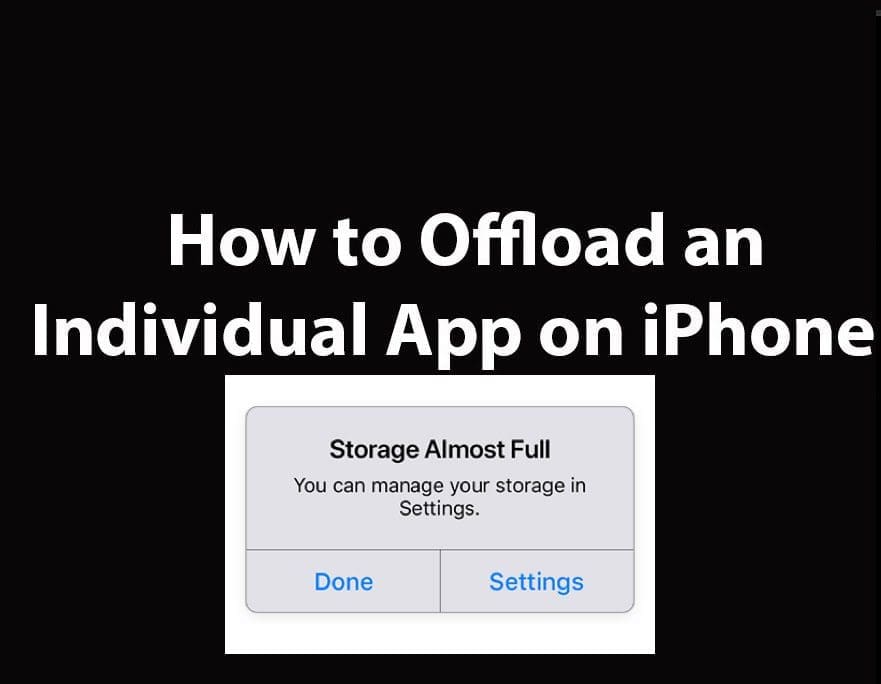
In my previous article, I discussed how to uninstall Apps automatically: How to automatically Offload Unused Apps on iPhone. In this piece, I will be discussing how to manually offload individual apps on iPhone. Offloading an app is different from deleting an app on an iPhone. The Offload Unused Apps feature frees up the storage used by the apps but keep the documents and data intact. It helps you avoid reconfiguring an app from scratch. The app’s icon and user data will remain on the iPhone. The icon will display a cloud with a downward arrow. When you want to use it again, tap the icon and download it again. Kindly refer to this interesting guide: How to install Windows Subsystem for Android (WSA) in Windows 11.

When you offload unused apps on your iPhone, the app is deleted, but the saved data from the app remains on your iPhone. But, If you don’t want to manually reduce the local storage to free some space, then Offload Unused Apps can work in the background to automatically recover space while keeping the app data backed up. Kindly refer to these related guides: How to remove a Bluetooth device and connect a new Bluetooth device to Macbook, and how to disable or enable FaceTime on Mac.

Why Should you offload Apps?

The Offload Unused Apps setting gives your iPhone control over which unused apps. I had a situation where an important App got offloaded and I missed a friend’s birthday. Because of this, I do not recommend enabling the automatic offload feature because you don’t want to lumber things up where you need to use a specific app, but your iPhone automatically offloaded it.

By manually offloading individual apps, you have complete control of your iPhone and your apps. This is why I have decided to describe these steps as well and this is the method I have employed.

Note: Manually offloading is optional as iOS automatically offloads unused apps when it’s low on storage (When enabled). Thus, to manually offload apps, go to Settings as shown below.

offload individual apps on iphone-IMG_7115

Under Settings, click on “General”.

offload individual apps on iphone-IMG_7120

Click on iPhone Storage

offload individual apps on iphone-IMG_7121

Select any apps you will love to manually offload. So, In my case, I will be manually offloading the Telegram App. Click on the App (in my case Telegram).

offload individual apps on iphone-IMG_7127

Click on Offload App. Hence, this will ensure the Telegram App is offloaded. If you wish to Uninstall or delete the App, just hit the Delete App button as shown above.

offload individual apps on iphone-IMG_7126

Even after offloading an app on your iPhone, the app’s icon will appear on your iPhone’s Home screen. You will be able to tell that the app is offloaded because there will be a small cloud icon below the app icon.

To reinstall an app you have offloaded, simply tap on the app on your Home screen. A circle will appear on the icon after you have tapped on the app and it will begin to reinstall.

reinstallaniPhineapp

You can also reinstall an offloaded app by going to Settings -> General -> iPhone Storage and tapping on the offloaded app. Then, tap Reinstall App.

reinstallApp

This sums up how to offload individual apps on iPhone. I hope you found this blog post helpful. Please let me know in the comment session if you have any questions.

Rate this post

Thank you for reading this post. Kindly share it with others.

  • Click to share on X (Opens in new window) X
  • Click to share on Reddit (Opens in new window) Reddit
  • Click to share on LinkedIn (Opens in new window) LinkedIn
  • Click to share on Facebook (Opens in new window) Facebook
  • Click to share on Pinterest (Opens in new window) Pinterest
  • Click to share on Tumblr (Opens in new window) Tumblr
  • Click to share on Telegram (Opens in new window) Telegram
  • Click to share on WhatsApp (Opens in new window) WhatsApp
  • Click to share on Pocket (Opens in new window) Pocket
  • Click to share on Mastodon (Opens in new window) Mastodon
  • Click to share on Bluesky (Opens in new window) Bluesky
  • Click to share on Threads (Opens in new window) Threads
  • Click to share on Nextdoor (Opens in new window) Nextdoor
Mac

Post navigation

Previous Post: How to Add or Remove Sites from Favorites list in Microsoft Edge
Next Post: How to Create a Password Policy with Group Policy Object

Related Posts

  • Remove Nextcloud Desktop Client
    How to correctly uninstall Nextcloud from Mac Mac
  • iCloud for Windows
    Use iCloud for Windows: How to install and uninstall iCloud for Windows Mac
  • commit trong git 640
    How to uninstall Git from MacOS Mac
  • plain screenshot 1
    How to make a screenshot on a macOS device Mac
  • bluetooth headphones to mac 1200x628 1
    How to remove a Bluetooth device and connect a new Bluetooth device to Macbook Mac
  • zoom 2
    How to stop Zoom App from launching automatically at startup on Mac Mac

More Related Articles

Remove Nextcloud Desktop Client How to correctly uninstall Nextcloud from Mac Mac
iCloud for Windows Use iCloud for Windows: How to install and uninstall iCloud for Windows Mac
commit trong git 640 How to uninstall Git from MacOS Mac
plain screenshot 1 How to make a screenshot on a macOS device Mac
bluetooth headphones to mac 1200x628 1 How to remove a Bluetooth device and connect a new Bluetooth device to Macbook Mac
zoom 2 How to stop Zoom App from launching automatically at startup on Mac Mac

Leave a Reply Cancel reply

You must be logged in to post a comment.

Microsoft MVP

VEEAMLEGEND

vexpert-badge-stars-5

Virtual Background

GoogleNews

Categories

veeaam100

sysadmin top30a

  • SA
    How to Create Service Accounts, Organisation Units and Active Directory Security Groups Windows Server
  • azure
    Enter connection information for your on-premise directory or forests: Azure AD connect unable to connect directory, forest not available AWS/Azure/OpenShift
  • dc
    Fix MDT accidental OS deletion Windows Server
  • Azure DevOps Server
    How to Install Azure DevOps Server 2022 Automation
  • Install RSAT on Windows 11 today
    Install Remote Server Administration Tools on Windows 11 Windows
  • What Happens if You Turn Off Your Computer During windows update
    What Happens if You Turn Off Your Computer During an Update Windows
  • Change BitLocker Password in Windows
    How to Change BitLocker Password in Windows Security | Vulnerability Scans and Assessment
  • virtualbox guest additions rcm480x270u
    How to install virtual machine Guest Addition Virtualization

Subscribe to Blog via Email

Enter your email address to subscribe to this blog and receive notifications of new posts by email.

Join 1,839 other subscribers
  • RSS - Posts
  • RSS - Comments
  • About
  • Authors
  • Write for us
  • Advertise with us
  • General Terms and Conditions
  • Privacy policy
  • Feedly
  • Telegram
  • Youtube
  • Facebook
  • Instagram
  • LinkedIn
  • Tumblr
  • Pinterest
  • Twitter
  • mastodon

Tags

AWS Azure Bitlocker Microsoft Windows PowerShell WDS Windows 10 Windows 11 Windows Deployment Services Windows Server 2016

Copyright © 2025 TechDirectArchive


Loading Comments...
 

You must be logged in to post a comment.