Skip to content

TechDirectArchive

Hands-on IT, Cloud, Security, Veeam & DevOps

  • Home
  • About
  • Advertise With US
  • Reviews
  • Contact
  • Toggle search form

How to apply Windows Updates from WSUS to AWS Instances

Posted on 17/05/201806/12/2023 IT Expert By IT Expert No Comments on How to apply Windows Updates from WSUS to AWS Instances
  1. Home
  2. AWS/Azure/OpenShift
  3. How to apply Windows Updates from WSUS to AWS Instances
Patch management

Automate the process of applying Windows Updates from WSUS to multiple servers on AWS using RunCommand. Streamline your update management effortlessly. After having updates pushed to all servers from WSUS, in order to avoid the manual operation of installing updates, we can automate this process to a whole lot of servers on AWS using the RunCommand. To apply Updates on WSUS, use the run command. Please see How to Configure SSL between WSUS servers (Upstream and Downstream Servers), Handy WSUS Commands, Windows Server Update Services Commands, WAUACLT, PowerShell and USOClient.

For more articles I have written, see the following hyperlinks: Configuring WSUS Email Notification to Work With Office365, How to setup and configure Windows server update services (WSUS).

What to consider when applying WSUS updates

Some prerequisites must be met before applying Windows updates to production servers. They are as follows;

When applying Windows Updates from WSUS, make sure to deploy these updates to the Test-servers-group (Test servers). After applying updates on the test servers, access them via RDP before proceeding to update Production servers.

Other factors that must be considered:

  • Pull an AMI of all Production Server AMI (Ensure this is complete before applying windows updates)
  • Approve and install identical updates for the test-server-group. Once tested and applied, approve them for Production servers.

Step 2:  Proceed to AWS

Access the RunCommand (within Systems Manager and Services) to seamlessly handle Windows Updates from WSUS for efficient management.

Choose AWS-ConfigureWindowsUpdates to enable automatic installation of Windows updates when triggered.
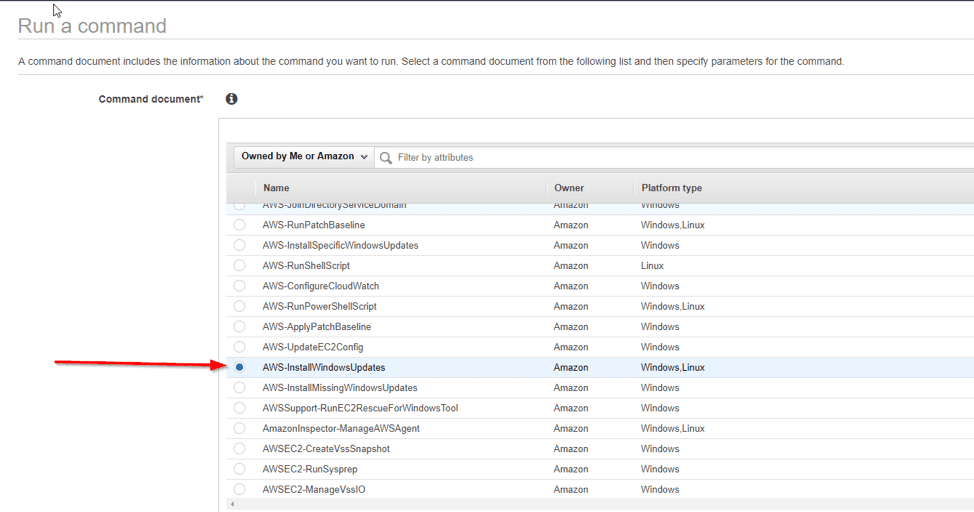
WSUS benefits

on the same page, select the instances.

Please see how to Start, Stop and Restart Windows Server Update Services (WSUS) via PowerShell and CMD, Windows Server Update Services: Windows 2016 Servers does not show up on WSUS console, and WSUS clients appear and disappear from the WSUS Update Services console.

The prerequisites to have these servers available are as follows

To maintain optimal performance, keep your EC2config for Windows Server 2008/2012 or EC2 Launch for Windows Server 2016 updated, including essential Windows Updates from WSUS.

The SSM agent attaches the appropriate role to all instances, ensuring correct configuration and functionality. You can never find the instances here if this is not the case.
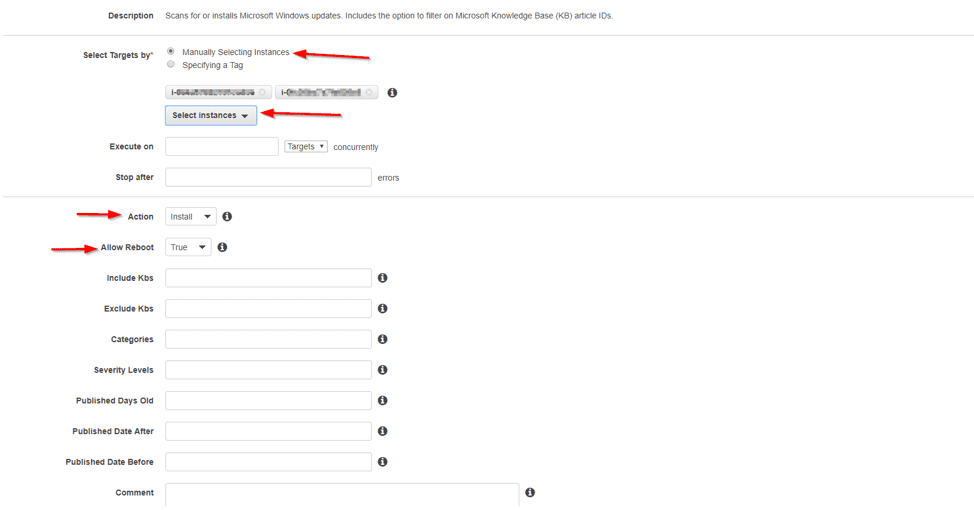
Update deployment

And click on the run. Ensuring the installation of updates and automatic server reboot for seamless operation.

Other information

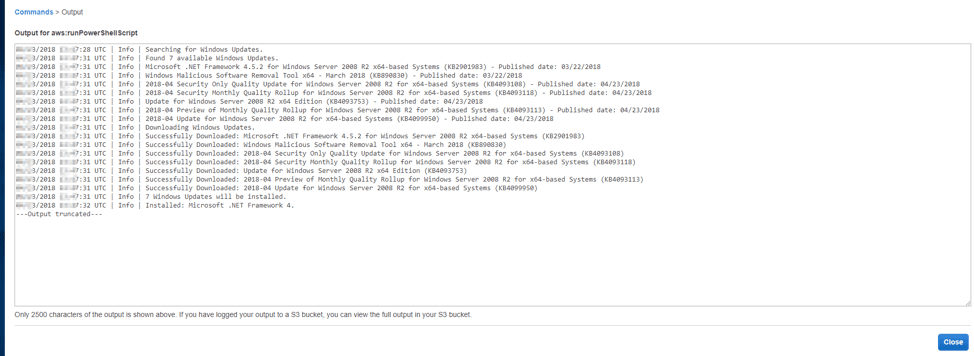
Note, you can view the status of the run command to see if any failed or succeeded as shown below


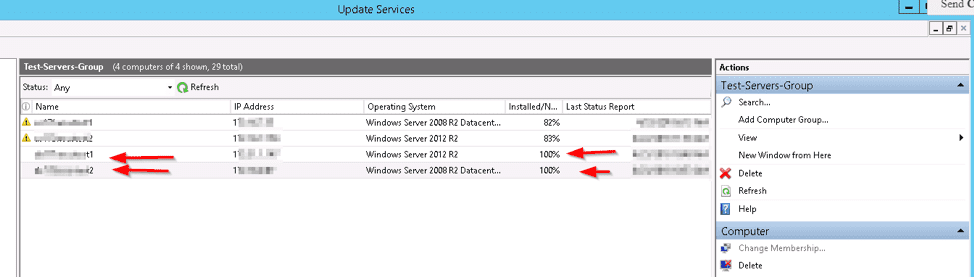
Check on the WSUS server after the updates are applied

Check the WSUS console; it should display servers fully patched, as shown below. Furthermore, I confirmed non-problematic updates and accessible servers through Remote Desktop Manager (RDP).
Note: Prerequisites determine an instance’s eligibility or discoverability via the run command. The RunCommand output will look like this below.

Also, see the “Important Areas to Master on WSUS (Installed and not applicable, Install 1/4, and Installed / Not applicable 100)”, Targeting WSUS Client with the Registry keys: How to configure WSUS Clients to get Updates from the WSUS server using Registry settings,
Windows Server upgrades

I hope you found this blog post on how to apply Windows Updates from WSUS to AWS instances helpful. If you have any questions, please let me know in the comment session.

Rate this post

Thank you for reading this post. Kindly share it with others.

  • Share on X (Opens in new window) X
  • Share on Reddit (Opens in new window) Reddit
  • Share on LinkedIn (Opens in new window) LinkedIn
  • Share on Facebook (Opens in new window) Facebook
  • Share on Pinterest (Opens in new window) Pinterest
  • Share on Tumblr (Opens in new window) Tumblr
  • Share on Telegram (Opens in new window) Telegram
  • Share on WhatsApp (Opens in new window) WhatsApp
  • Share on Mastodon (Opens in new window) Mastodon
  • Share on Bluesky (Opens in new window) Bluesky
  • Share on Threads (Opens in new window) Threads
  • Share on Nextdoor (Opens in new window) Nextdoor
AWS/Azure/OpenShift, Windows Server Tags:AWS, AWS CLI, services, Windows Deployment Services

Post navigation

Previous Post: Important Areas to Master on WSUS
Next Post: SimpleSAMLphp Setup on Windows Server [Part 1]

Related Posts

  • screenshot 2020 03 13 at 20.24.17
    How to install additional packages via Cygwin Windows Server
  • How to determine Active Directory Site Name
    How to determine Active Directory Site Name Network | Monitoring
  • amazon ec2 multiple ips 1
    What to note before assigning Multiple IPs’ to an Instance AWS/Azure/OpenShift
  • Remove Custom Domain from Entra ID and Azure tenant
    Delete Azure Tenant: Remove Custom Domain from Entra ID AWS/Azure/OpenShift
  • FileNotFoundError Errno 2 No such file or directory
    Fix FileNotFoundError: [Errno 2] No such file or directory Scripts
  • Account restrictions are preventing this user from signing in
    Resolve Account restrictions are preventing this user from signing in: User Account Password has expired Windows

More Related Articles

screenshot 2020 03 13 at 20.24.17 How to install additional packages via Cygwin Windows Server
How to determine Active Directory Site Name How to determine Active Directory Site Name Network | Monitoring
amazon ec2 multiple ips 1 What to note before assigning Multiple IPs’ to an Instance AWS/Azure/OpenShift
Remove Custom Domain from Entra ID and Azure tenant Delete Azure Tenant: Remove Custom Domain from Entra ID AWS/Azure/OpenShift
FileNotFoundError Errno 2 No such file or directory Fix FileNotFoundError: [Errno 2] No such file or directory Scripts
Account restrictions are preventing this user from signing in Resolve Account restrictions are preventing this user from signing in: User Account Password has expired Windows

Leave a Reply Cancel reply

You must be logged in to post a comment.

Microsoft MVP

VEEAMLEGEND

vexpert-badge-stars-5

Virtual Background

GoogleNews

Categories

veeaam100

Veeam Vanguard

  • adc
    How to add a second Domain Controller Windows Server
  • Check Virtualization
    Enable Virtualization in BIOS: Determine if the Intel VT-x or AMD-V Virtualization Technology is enabled in BIOS Virtualization
  • vmwarevinchin
    3 Ways to Convert VMware VMs to Hyper-V Backup
  • feature photo quit vim
    How to Exit Linux Vim or Vi Editor Linux
  • PowerShell logo
    PowerShell: How to update PowerShellGet and Package Management Windows Server
  • fghj
    MDT deployment failed and Stuck at Command Prompt: Windows installation does not proceed via PXE boot Windows Server
  • discorddd
    Discord Installation Guide for Linux System Linux
  • TrueCrypt to BitLocker
    How to Migrate from TrueCrypt to BitLocker Backup

Subscribe to Blog via Email

Enter your email address to subscribe to this blog and receive notifications of new posts by email.

Join 1,796 other subscribers
  • RSS - Posts
  • RSS - Comments
  • About
  • Authors
  • Write for us
  • Advertise with us
  • General Terms and Conditions
  • Privacy policy
  • Feedly
  • Telegram
  • Youtube
  • Facebook
  • Instagram
  • LinkedIn
  • Tumblr
  • Pinterest
  • Twitter
  • mastodon

Tags

Active Directory Azure Bitlocker Microsoft Windows PowerShell WDS Windows 10 Windows 11 Windows Deployment Services Windows Server 2016

Copyright © 2025 TechDirectArchive

Loading Comments...

You must be logged in to post a comment.