Skip to content

TechDirectArchive

Hands-on IT, Cloud, Security & DevOps Insights

  • Home
  • About
  • Advertise With US
  • Reviews
  • Contact
  • Toggle search form
Home » Windows » How to Start, Stop and Restart Windows Server Update WSUS Services via PowerShell and CMD

How to Start, Stop and Restart Windows Server Update WSUS Services via PowerShell and CMD

Posted on 04/02/202022/09/2023 Christian By Christian No Comments on How to Start, Stop and Restart Windows Server Update WSUS Services via PowerShell and CMD
Windows Server Update Services

Windows Server Update Services (WSUS) previously known as Software Update Services (SUS) is a computer program and network service developed by Microsoft Corporation that enables administrators to manage the distribution of updates and hotfixes released for Microsoft products to computers in a corporate environment. For more articles I have written, see the following links: Configuring WSUS Email Notification to Work With Office365, How to setup and configure Windows server update services (WSUS), Important Areas to Master on WSUS (Installed and not applicable, Install 1/4, and Installed / Not applicable 100), and how to configure WSUS Clients to get Updates from the WSUS server using Registry settings.

WSUS Service Control with PowerShell and CMD

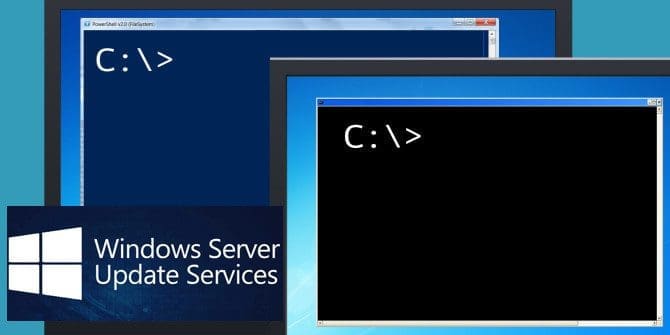
The following commands below are used to restart the Windows WSUS service using PowerShell and the Command Line (CLI) tool. Most times, you may encounter issues restarting Windows Services via the services.msc console, then using the CMD, will become very handy at this time. Using the command line is also very useful when configuring a script for WSUS and performing a WSUS management task.

The below commands are PowerShell syntax used to start, stop and restart the WSUS service. Here are some more guides that you might want to see: How to apply Windows Updates from WSUS to the server using AWS RunCommand, How to Configure SSL between WSUS servers (Upstream and Downstream Servers), Handy WSUS Commands – Windows Server Update Services Commands, WAUACLT, PowerShell and USOClient, Windows Server Update Services: Windows 2016 Servers does not show up on WSUS console, WSUS clients appear and disappear from the WSUS Update Services console.

Restart the WSUS service

Restart-Service wsusservice

Start the WSUS service

Start-Service wsusservice

Stop the WSUS service

Stop-Service wsusservice

To view the status of the WSUS service

Get-Service wsusservice

The below commands are Command line syntax used to start, stop and restart WSUS service.

To stop WSUS service

net stop wsusservice

To start the WSUS Service

net start wsusservice

I hope you found this blog post on WSUS Service Control with PowerShell and CMD helpful. Please let me know in the comment session if you have any questions.
Rate this post

Thank you for reading this post. Kindly share it with others.

  • Share on X (Opens in new window) X
  • Share on Reddit (Opens in new window) Reddit
  • Share on LinkedIn (Opens in new window) LinkedIn
  • Share on Facebook (Opens in new window) Facebook
  • Share on Pinterest (Opens in new window) Pinterest
  • Share on Tumblr (Opens in new window) Tumblr
  • Share on Telegram (Opens in new window) Telegram
  • Share on WhatsApp (Opens in new window) WhatsApp
  • Share on Mastodon (Opens in new window) Mastodon
  • Share on Bluesky (Opens in new window) Bluesky
  • Share on Threads (Opens in new window) Threads
  • Share on Nextdoor (Opens in new window) Nextdoor
Windows Tags:Microsoft Windows, Windows Deployment Services, Windows Server 2016

Post navigation

Previous Post: How to set up System Insights on Windows Admin Center
Next Post: Why GPO is not the best solution for managing Windows updates

Related Posts

  • Enable Hyper V on Windows 11 Create a VM with PowerShell
    Run Hyper-V on Windows 11: Convert Physical PC to Hyper-V VM Virtualization
  • image 63
    Protect Remote Desktop credentials with Windows Defender Remote Credential Guard or Restricted Admin Mode Windows
  • Featured image 1
    Add and Remove Folders in Favorites in Microsoft Outlook Windows
  • Disable BitLocker
    Disable BitLocker: How to correctly disable MBAM-encrypted devices Windows
  • screenshot 2020 03 01 at 21.19.07
    Various ways to hide Windows Taskbar Windows
  • PXE Boot to Install OS HyperV
    Run Hype-V on Windows 11 and Install Windows OS via PXE Boot Windows

More Related Articles

Enable Hyper V on Windows 11 Create a VM with PowerShell Run Hyper-V on Windows 11: Convert Physical PC to Hyper-V VM Virtualization
image 63 Protect Remote Desktop credentials with Windows Defender Remote Credential Guard or Restricted Admin Mode Windows
Featured image 1 Add and Remove Folders in Favorites in Microsoft Outlook Windows
Disable BitLocker Disable BitLocker: How to correctly disable MBAM-encrypted devices Windows
screenshot 2020 03 01 at 21.19.07 Various ways to hide Windows Taskbar Windows
PXE Boot to Install OS HyperV Run Hype-V on Windows 11 and Install Windows OS via PXE Boot Windows

Leave a Reply Cancel reply

You must be logged in to post a comment.

Microsoft MVP

VEEAMLEGEND

vexpert-badge-stars-5

Virtual Background

GoogleNews

Categories

veeaam100

Veeam Vanguard

  • Complete Guide on TestRail as a Test Management Tool   banner
    Complete Guide on TestRail as a Test Management Tool Security | Vulnerability Scans and Assessment
  • VBscript fixed and working in WinPE
    Windows PE working for Windows 11 and Windows Server 2022 Windows Server
  • images 2
    How to configure and use Pleasant Password RDP SSO Password Manager
  • main
    How to Move OneDrive Folder to a different location in Windows Windows
  • Azure Backup 1
    How to Install Azure Backup Agent AWS/Azure/OpenShift
  • Featured image Microsoft Whiteboard
    How to work with Microsoft Blackboard via private or commercial accounts Microsoft Exchange/Office/365
  • Machine translation software min
    Self-hosted translator: How to install and uninstall SYSTRAN 6 translator on Windows Security | Vulnerability Scans and Assessment
  • banner 2
    How to Configure and Run Performance Tests in Postman Automation

Subscribe to Blog via Email

Enter your email address to subscribe to this blog and receive notifications of new posts by email.

Join 1,809 other subscribers
  • RSS - Posts
  • RSS - Comments
  • About
  • Authors
  • Write for us
  • Advertise with us
  • General Terms and Conditions
  • Privacy policy
  • Feedly
  • Telegram
  • Youtube
  • Facebook
  • Instagram
  • LinkedIn
  • Tumblr
  • Pinterest
  • Twitter
  • mastodon

Tags

AWS Azure Bitlocker Microsoft Windows PowerShell WDS Windows 10 Windows 11 Windows Deployment Services Windows Server 2016

Copyright © 2025 TechDirectArchive


Loading Comments...
 

You must be logged in to post a comment.