Skip to content

TechDirectArchive

Hands-on IT, Cloud, Security & DevOps Insights

  • Home
  • About
  • Advertise With US
  • Reviews
  • Contact
  • Toggle search form
Home » Windows Server » How to create and configure a Shared Folder on Windows Server

How to create and configure a Shared Folder on Windows Server

Posted on 24/11/202110/04/2024 Imoh Etuk By Imoh Etuk No Comments on How to create and configure a Shared Folder on Windows Server
Slide1-4

Having talked about  how to configure NFS Server on Windows Server in my previous post, this post will focus on how to create the shared folder on server. Also, we’re going to create a folder(s) to store data created by multiple application instances in your organization and use NFS to share the folder between them. Also, see Install Workstation Pro 17: Fix failed to initialise library for mounting and unmounting virtual disks, and and how to back up an Azure VM from the VM settings.

Create folders for both Manager and Sessions and complete the steps below for each applications storage folder.

Moreover, to see other related guides on how to upgrade Windows 10 with an unsupported CPU and TPM 1.0 to Windows 11​, and Azure virtual networks: how to prepare Azure and on-premises virtual networks using Azure CLI commands.

Let’s get started by doing the following:

Open Fire Explorer and create a Shared Folder in C:\ drive. Examples: “temp-storage” and “shared-storage”

Right-click on the new folder and select Properties. On the ‘Properties’ window, select the ‘NFS Sharing‘ tab. When done, select the ‘Manage NFS Sharing…‘ button.

Temp-storage
Temp-Storage

5. In the NFS Advanced Sharing widget, check the ‘Share this folder‘ checkbox, then select Permissions.

NFS-Shared-Permission-Screen-How-to-Create-the-Shared-folder-on-Server
Shared Permission Screen

6. From the NFS Share Permissions screen, do the following:

  • Select ‘Read-Write‘ option in the ‘Type of access:’ field
  • Select the checkbox ‘Allow root access.’
Shared-Permission-Screen-How-to-Create-the-Shared-folder-on-Server
NFS Shared Permission Screen

7. Select OK, then Close, to complete sharing the newly created Shared Folder.

Configure Shared Server’s Firewall

Let’s assume we are running MySQL database application as our internal application. To configure the Firewall on the Shared Server to enable the MySQL database application nodes to access the components installed.

Open the ports of the following components:

  • MySQL is running on port 3306 while NFS is running on port  2049.

To do so, we will do the following:

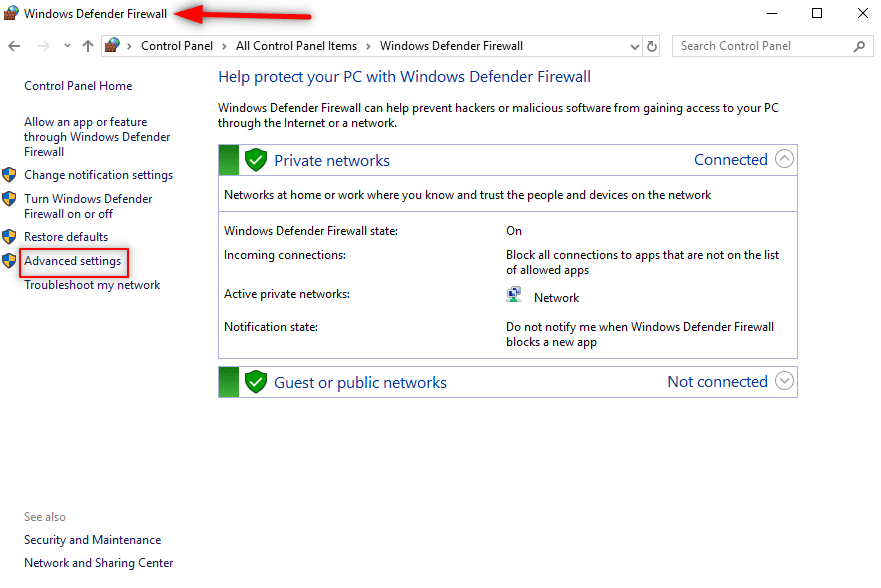
  1. From the Control Panel, open Windows Defender Firewall.
  2. Then Select Advanced settings.
Windows-Defender-Firewall-How-to-Create-the-Shared-folder-on-Server
Windows Defender Firewall

3. On the Windows Defender Firewall with Advanced Security window, select Inbound Rules from the left panel.
4. When done, Select New Rule. In the Inbound Rules from the right panel.
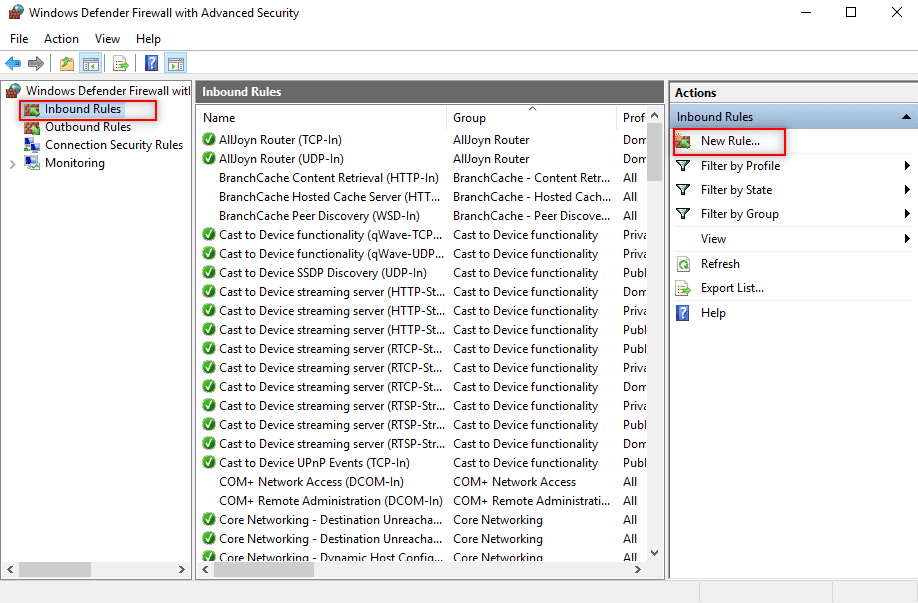
New-Inbound-Rule-How-to-Create-the-Shared-folder-on-Server
Inbound Rule

5. On the New Inbound Rule Wizard screen, select the option 'Port' and click Next. focus on how to Create and Configure the Shared Folder on Windows Server.

Port-Number-Selection
Select Port

6. On the Protocol and Ports screen, do the following:

  • Select TCP option
  • Then Select Specific local ports option, and enter the port values of MySQL and NFS, separate each value by a comma. For example we have: 3306 , 2049.
  • Click Next when you are done.
Defining-Port-Numbers
Defining Port Numbers

7. On the Action screen, make sure the option Allow the connection is selected, then click Next.
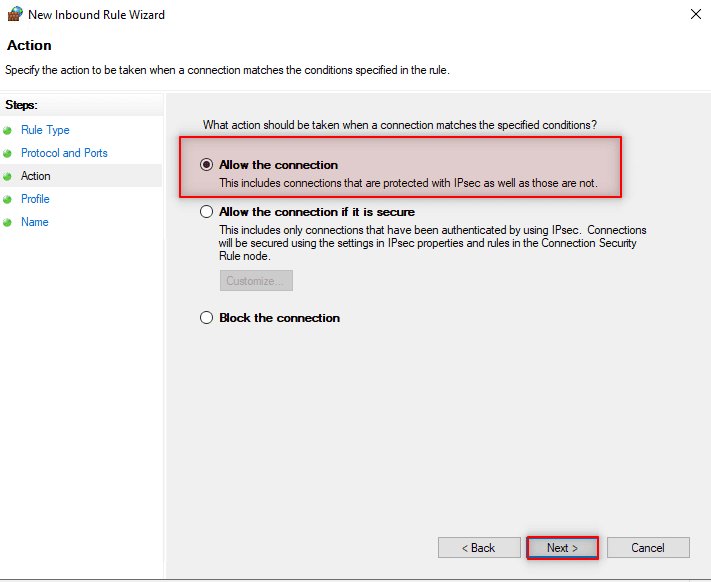
Allow-Port-Number-Connection
Allow Connection

8. On the Profile screen, make sure all the options for Domain, Private and Public are checked, then click Next.

Checked-options
Check Domain, Private and Public Profile

9. On the Name screen, enter a name for your new rule, e.g. ‘Shared Ports (Shared Folder) for MySQL database application', then click Finish.

Specify-a-name
Enter a Name

Finally, you’re done to create, configure and set up the shared server on Windows .

Please note that you must restart the server for the changes and configurations to take effect!

In summary, I hope you found this blog post “how to Create and Configure the Shared Folder on Windows Server” helpful. Also, If you have any questions, please let me know in the comment session.

Rate this post

Thank you for reading this post. Kindly share it with others.

  • Share on X (Opens in new window) X
  • Share on Reddit (Opens in new window) Reddit
  • Share on LinkedIn (Opens in new window) LinkedIn
  • Share on Facebook (Opens in new window) Facebook
  • Share on Pinterest (Opens in new window) Pinterest
  • Share on Tumblr (Opens in new window) Tumblr
  • Share on Telegram (Opens in new window) Telegram
  • Share on WhatsApp (Opens in new window) WhatsApp
  • Share on Mastodon (Opens in new window) Mastodon
  • Share on Bluesky (Opens in new window) Bluesky
  • Share on Threads (Opens in new window) Threads
  • Share on Nextdoor (Opens in new window) Nextdoor
Windows Server Tags:Microsoft Windows, Windows 10, Windows Server 2016

Post navigation

Previous Post: How to install NFS Server on Windows Server
Next Post: Create a new Azure Disk: How to create and attach an extra Disk to Azure Virtual Machine

Related Posts

  • Prevent Local Administrators from turning off BitLocker 1
    Prevent Local Administrators from managing BitLocker with the manage-bde command Windows
  • Disable BitLocker
    How to Disable BitLocker on Windows 10 Windows
  • DC Name
    Install and configure Active Directory Domain Services on Windows Server Windows
  • MBAM noncompliance
    How to determine why an MBAM-protected device is non-compliant Security | Vulnerability Scans and Assessment
  • image 1
    Install and License Devolutions Remote Desktop Manager on Mac Mac
  • sign11
    Windows sign-in options and account protection on Windows 11 Windows

More Related Articles

Prevent Local Administrators from turning off BitLocker 1 Prevent Local Administrators from managing BitLocker with the manage-bde command Windows
Disable BitLocker How to Disable BitLocker on Windows 10 Windows
DC Name Install and configure Active Directory Domain Services on Windows Server Windows
MBAM noncompliance How to determine why an MBAM-protected device is non-compliant Security | Vulnerability Scans and Assessment
image 1 Install and License Devolutions Remote Desktop Manager on Mac Mac
sign11 Windows sign-in options and account protection on Windows 11 Windows

Leave a Reply Cancel reply

You must be logged in to post a comment.

Microsoft MVP

VEEAMLEGEND

vexpert-badge-stars-5

Virtual Background

GoogleNews

Categories

veeaam100

Veeam Vanguard

  • cisco switches 2
    How to disable Spanning-Tree Globally Network | Monitoring
  • Case Of Internal Sabotage And Recovery
    A real case of Internal Sabotage and Recovery Network | Monitoring
  • DC 3
    How to demote and remove a Domain Controller on Windows Servers Windows Server
  • Featured Image Windows Security
    How to protect your Windows PC from potentially unwanted applications Security | Vulnerability Scans and Assessment
  • BitRecDelegation
    Delegate control for BitLocker recovery keys in Active Directory Windows
  • MBAM
    Fix MBAM Client Deployment is only supported on MBAM 2.5 SP1 Windows
  • 960x0
    How to resolve request timed out when pinging Windows Server
  • wordpresserrorsiteadmin
    There has been a critical error on this website please check your site admin email inbox for instructions Web Server

Subscribe to Blog via Email

Enter your email address to subscribe to this blog and receive notifications of new posts by email.

Join 1,808 other subscribers
  • RSS - Posts
  • RSS - Comments
  • About
  • Authors
  • Write for us
  • Advertise with us
  • General Terms and Conditions
  • Privacy policy
  • Feedly
  • Telegram
  • Youtube
  • Facebook
  • Instagram
  • LinkedIn
  • Tumblr
  • Pinterest
  • Twitter
  • mastodon

Tags

AWS Azure Bitlocker Microsoft Windows PowerShell WDS Windows 10 Windows 11 Windows Deployment Services Windows Server 2016

Copyright © 2025 TechDirectArchive


Loading Comments...
 

You must be logged in to post a comment.