Veeam ONE provides IT administrators with real-time monitoring, business documentation, and management reporting for Veeam Backup & Replication, Veeam Backup for Microsoft 365, VMware vSphere, VMware Cloud Director, and Microsoft Hyper-V. In this article, we shall discuss “Install Veeam ONE and Add VBR: Fix failed to connect to VBR: Veeam ONE supports Veeam Backup and Replication and Veeam Backup Enterprise Manager version 10 Update 1 and later”. Please, see How to update Veeam Backup and Replication [VBR], and how to Install SQL Server Management Studio 20 on Windows Server.
It proactively addresses business challenges by monitoring VM performance, generating capacity planning reports, and delivering transparent, business-oriented insights into the virtual infrastructure.
Also, Veeam ONE includes the Veeam ONE Client for monitoring and managing virtual, backup, and Microsoft 365 infrastructures, enabling users to track performance, analyze data protection efficiency, troubleshoot issues, and configure monitoring.
While the Veeam ONE Web Client delivers dashboards and reports to identify configuration issues, optimize resource use, track changes, plan capacity growth, and ensure mission-critical workloads remain protected.
Here is how to Fix Error 1069: Windows could not start the Veeam backup service on local computer, how to upgrade Veeam Backup and Replication 12.3, and how to Upgrade Veeam Backup and Replication to version 12.2.
Add a Veeam Backup and Replication Server to Veeam ONE
To collect data about your backup infrastructure and data protection operations. You should configure connections to Veeam Backup and Replication servers in Veeam ONE Client. You can connect the following types of servers:
- Veeam Backup & Replication server to monitor standalone backup servers
- Veeam Backup Enterprise Manager to monitor all backup servers federated under Veeam Backup Enterprise Manager
We will therefore configure Veeam ONE to monitor Veeam Backup & Replication server as a standalone backup servers. To proceed, ensure to check that product licenses are compatible.
At the bottom of the inventory pane. Open the Veeam Backup and Replication view, and click on “Add Server” as shown below.

Enter the DNS name or IP address of the server and click on next

You can add a new credential or select an already added credential

Next, click next to proceed.

As you can see below, there is a problem and we are unable to add the VBR server because it “Veeam ONE failed to connect to the VBR server. It was unable to add the backup server. Veeam ONE supports Veeam Backup and Replication and Veeam Backup Enterprise Manager version 10 upgrade 1 or later”.
We have to fix this by removing VEEAM ONE and reinstallation it as the upgrade does not work. We will see why shortly.

Please, see Set up Veeam Backup for Microsoft Azure, How to fix Client Certificate Mapping Authentication error, and Demystifying Zero Trust with Veeam: Design your Architecture.
Initiate Veeam ONE Upgrade
Veeam ONE 12.3 can be downloaded from the following URL. Here is how to upgrade Veeam ONE to v12.1. Proceed and have it downloaded.

Accept the EULA and do not forget to check “I agree to the terms and conditions of the EULA and click on Accept”.

Let us stop the Veeam ONE monitoring Service.

After you mount or insert the disk with Veeam ONE installation image. Autorun will open a splash screen with installation options.
If this is not the case, you can manually open the splash window by clicking on Setup. Please, see Fix missing path and delete a Veeam Backup Repository.

Click Upgrade.

Select Upgrade Veeam ONE

As you can see below, the upgrade is unable to continue due to missing components. I will have to follow the recommendation to remove Veeam ONE and start the setup again.
Setup has detected inconsistent configuration: some Veeam ONE components are missing. Remove the installed Veeam ONE components manually and start the setup wizard again.

Unfortunately, the logs did not contain the missing components; otherwise, I would have found a workaround.

Please see How to Install OpenSSL on Windows Computers, How to fix Windows Update Fails with Error 0x80092004, and how to Fix the Port used for the Virtualhost is not an Apache Listen Port.
Remove Veeam ONE
I will proceed and download the Veeam Data Platform from the following URL.
To uninstall Veeam ONE, open the Start menu, go to Control Panel > Uninstall a program, choose Veeam ONE components you want to uninstall and click Remove
Since you are used to removing programs via the Windows Settings and Control Panel. I will show you a different method on how to remove the Veeam ONE components. Navigate to the VM settings, select the SCSI controller, and attach the installation image

Double click on the virtual drive as shown below and click on Upgrade.

Click on Install

Select Veeam ONE 12.1

Click on Install Veeam ONE

Here, you will be prompted to remove Veeam ONE. Click on Remove.

As you can see, the uninstallation of the components will be started as if you were using the Control Panel or Windows Settings.


The components uninstall is in progress.

The SQL Server instance installed and used by Veeam ONE is not removed during the uninstall of Veeam ONE. It needs to be removed separately using the standard Add or Remove Programs feature in Control Panel etc. Veeam ONE database and its data is retained until you manually remove the database or uninstall the SQL Server instance
Also see how to install Splunk and Veeam App on Windows Server to monitor VBR, and the “Deep Dive into Protecting AWS EC2 and RDS Instances and VPC“.
Reinstall Veeam ONE
Follow the same steps as shared above to reinstall Veeam ONE unto your Windows Server. Click on Install to proceed.

Click on Install Veeam ONE

Accept the license as shown below

Browse to the local license file or sign in with Veeam.

Specify the service account to be use and enter the password.

Below are the components to be installed. You can uncheck the components you do not want.

I will be suing the existing instance and also connect via Windows Authentication. Click next to proceed.

You can optionally specify the Data Locations. I am fine with the defaults.

I am also fine with the defaults Veeam ONE Data Collection Mode and click Next to proceed.

On the port configuration, click next if you are not making any changes.

From the “Ready to Install”, click on Install and click to check for product updates automatically.

As you can see, Veeam ONE is now installing. Here, the Veeam ONE client is installed first.

Secondly, the Veeam ONE server installation will follow.

In the third step, the Veeam ONE Web Services will be installed.

Last step involves finalizing the services and starting the Veeam ONE Service.

As you can see below, we have successfully reinstalled the Veeam ONE 12.3 on my Windows Server 2025.

You will be required to restart your Pc to apply the Veeam ONE configuration changes.

Please, see Perform an in-place upgrade from Windows Server 2016 to Windows Server 2019, and how to Upgrade Windows Server 2019 to 2022 via iDRAC.
Add VBR to Veeam ONE
Follow the same steps as discussed above and click on Finish to complete the steps of adding the Veeam Backup Server to Veeam ONE.

Keep in mind that it may take a while for Veeam ONE to collect and display configuration and performance data for the newly added backup server and managed backup infrastructure components as shown in the image below.
After you connect a Veeam Backup and Replication server. Veeam ONE imports all historical data that is stored on the backup server.


If you have some failed jobs, you can drill deep to see the jobs that failed etc.

Having identified the failed jobs, I will proceed to fix them. As shown below, there are no more failed jobs in the VM Jobs Status. Therefore, Veeam ONE is extremely useful for monitoring your jobs and virtual infrastructure.

Also, see how to upgrade Windows Server Evaluation to Full Version, how to upgrade Microsoft SQL Server 2019 to 2022, and how to upgrade Windows Admin Center 2306 – 2311: Run WACmg v2401.
Veeam ONE Web Client
The Veeam ONE Web Client is a browser-based interface that provides dashboards and reporting services. It is designed to help you monitor and manage your virtual and backup infrastructure by helping to identify misconfigurations across your virtualized environment.
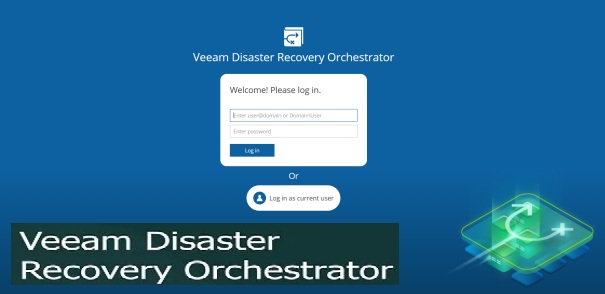
When launched, you can log in using either the sAMAccount format of UPN or as the current user.

Upon login, you will be prompted with the welcome to Veeam ONE UI window. You can skip or walk through the window by click on Start.

The Threat Center dashboard is specifically designed to enhance the security of Veeam Backup & Replication. It provides a comprehensive overview of key security metrics through various interactive widgets. These widgets offer detailed insights, with additional information appearing when hovering over specific sections, allowing users to quickly assess and address security-related aspects of their backup environment

You can add more widgets as you wish.

The Veeam Backup & Replication Dashboard in Veeam ONE provides a centralized view of the health and performance of your Veeam backup infrastructure and enables you to monitor the job status
It also highlights top repositories by used space, Top jobs by duration and protected VMS etc.

As you can see below, I have fixed all job status failure and warnings reported by Veeam ONE.

Please see Cluster creation in Proxmox VE, steps to Administer LXC Containers: Easy Guide, and how to extend Proxmox Local Container Storage.
Heatmap
The Veeam ONE Heatmap is a visual tool used to quickly assess the status and health of your virtual and backup infrastructure. It uses color-coded indicators to represent the performance, health, and capacity of various components in your environment. Thereby, making it easier to identify potential issues and areas needing attention.
if the default widgets are not sufficient. You can add more (New) widgets.

As you can see, we have added the Backup Job Status widget.

You can also use Splunk to monitor Veeam as it allows you to aggregate and analyze logs and data from multiple Veeam components in one centralized platform, making it easier to monitor and manage the entire backup infrastructure. Please, see how to install Splunk and Veeam App on Windows Server to monitor VBR.

Please see DSM Security: How to Protect Synology DS923+ NAS, Cybersecurity Tips to Secure Synology NAS against Ransomware, and Sign-in options for Windows: Ditch Password for Enhanced Security.
Add Virtual Infrastructure to Veeam ONE
To collect data about Microsoft Hyper-V infrastructure objects, you must configure connections to Microsoft Hyper-V servers in Veeam ONE Client.
You can connect the following types of servers as I am interested in Microsoft Hyper-V Servers:
- Standalone Hyper-V hosts.
- SCVMM server
- Failover clusters
To do this, select Virtual Infrastructure from the Inventory Pane as shown below and click on Add Server

I will select Microsoft Hyper-V

Enter the DNS or IP address as shown below.

Select my already added credentials. If you do not have one already, click on the Add button and click next.

On the summary page, click on finish

After connecting Microsoft Hyper-V servers or Veeam Backup & Replication. Veeam ONE will automatically includes all child objects managed by the server in the data collection scope. If you prefer not to monitor or report on certain managed objects, you can exclude them from the data collection scope.


You can drill down on the performance of the Hyper-V host or a selected VM

Below is a list of the Infrastructure Objects

You could also specify the Guest OS credentials in order to view running processes as shown below.

Below are the running process for this VM and you can kill (terminate) a process from this window as well.

I hope you found this article on “Install Veeam ONE and Add VBR: Fix failed to connect to VBR: Veeam ONE supports Veeam Backup and Replication and Veeam Backup Enterprise Manager version 10 Update 1 and later” very useful. Please, feel free to leave a comment below.