Skip to content

TechDirectArchive

Hands-on IT, Cloud, Security & DevOps Insights

  • Home
  • About
  • Advertise With US
  • Contact
  • Reviews
  • Toggle search form
Home » AWS/Azure/OpenShift » Azure Storage: How to create Blob Storage and upload files

Azure Storage: How to create Blob Storage and upload files

Posted on 24/11/202116/10/2025 Dickson Victor By Dickson Victor No Comments on Azure Storage: How to create Blob Storage and upload files
aks-1

The Azure storage account contains all of your Azure Storage data objects which include: blobs, files, queues, and tables. In this guide, you will learn about Azure Storage: How to create Blob Storage and upload files. Please see how to install Kerberos packages in Windows via Cygwin, how to configure a remote server (windows) to Support Ansible, and how to deploy Azure VMware solution private cloud, how to create a Traffic Manager profile in Azure, and how to improve website response using Traffic Manager.

The storage account provides a unique namespace for your Azure Storage data that is accessible from anywhere in the world over HTTP or HTTPS.

Also here are some of my related guides: How to manage azure resource manager resource groups by using Azure CLI, and how to configure Azure resources with tools, how to install and configure Ansible on Ubuntu.

Create a storage account

A storage account provides access to Azure Storage services. The storage account constitutes the highest level of the name-space for accessing every of the Azure Storage service components like Azure Blob, Queue, etc. To create a storage account, you should be either the service administrator or a co-administrator for the associated subscription.

Go to the Azure Portal. In the search bar, type and then select Storage account. In the virtual network, click the + Create button then create a Storage account. Type the following below

- Choose your subscription. 
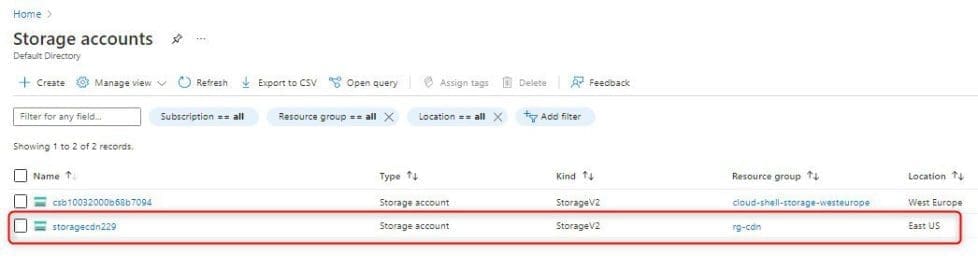
- Create a new Resource Group name (rg-cdn).

Instant details 
- Storage account name – Enter a name for the account using (storagecdn2)
- Region – East US
- Performance – Standard
- Redundancy- Locally-redundant storage (LRS)

Click Next : Advance >

Advance tab
Security – Secure transfer required and blob public access select enabled.

Select Review + create
Capture-72

Storage account successfully created.

Capture-73

Please see how to install Ansible on Windows with Cygwin, and how to automate infrastructure deployments in the cloud with ansible and azure pipelines.

How to create a blob container

Click on the new created storage account, under data storage select containers and then click on + Container. And do the following below

New container wizard 

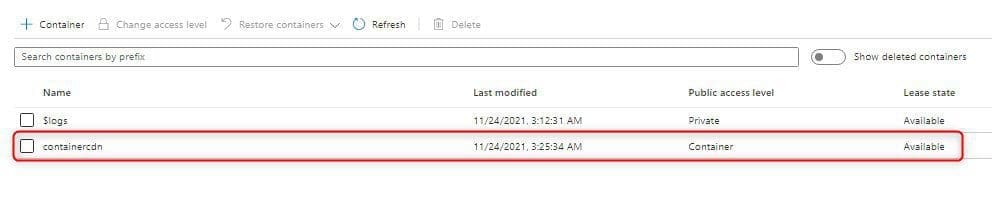
- Enter a container name (containercdn)
- Public access level – container (anonymous read access for containers and blob)
- Click create.
Capture-74

The container was successfully created.
Capture-75

Here are some exciting guides: How to Install a Windows Server Container Host, and how to Upload Batch Files to Azure Storage Account Using Azure CLI. Also, see how to determine What is taking up by Synology NAS Volume Space.

Upload Images to Container

Click on the newly created containdercdn inside the storage account, choose the Upload tab, and then click on the folder icon next to the file, to select a file from your local computer.

Go to Advanced Under upload to folder type a folder name (images) and then click upload.

Capture-76

Below is the file and folder you just created. Click on the folder and select the file name, then click on the URL to copy the link of the file, paste it on the web browser to preview the file

Capture-77

Below is the preview link of the file uploaded on the web browser

Capture-78

The above articles show how to create Azure storage, blob storage & Upload Files. Please see Running PowerShell remotely on Azure VMs, Running PowerShell remotely on Azure VMs, Hosting Static Website and Versioning on AWS S3, and how to Change the default Save and Download Location in Windows.

I hope you found this article useful on Azure Storage: How to create Blob Storage and upload files. Please let me know in the comment section if you have any questions.

5/5 - (1 vote)

Thank you for reading this post. Kindly share it with others.

  • Share on X (Opens in new window) X
  • Share on Reddit (Opens in new window) Reddit
  • Share on LinkedIn (Opens in new window) LinkedIn
  • Share on Facebook (Opens in new window) Facebook
  • Share on Pinterest (Opens in new window) Pinterest
  • Share on Tumblr (Opens in new window) Tumblr
  • Share on Telegram (Opens in new window) Telegram
  • Share on WhatsApp (Opens in new window) WhatsApp
  • Share on Mastodon (Opens in new window) Mastodon
  • Share on Bluesky (Opens in new window) Bluesky
  • Share on Threads (Opens in new window) Threads
  • Share on Nextdoor (Opens in new window) Nextdoor
AWS/Azure/OpenShift Tags:Azure

Post navigation

Previous Post: Linux Boot Process Explained Step by Step for Beginners
Next Post: How to install NFS Server on Windows Server

Related Posts

  • AWS flow log
    AWS Flow Logs IAM Role Setup AWS/Azure/OpenShift
  • Slide1 3
    Azure Virtual Networks: Preparing Azure and On-Premises Virtual Networks with Azure CLI Commands AWS/Azure/OpenShift
  • image 166
    How to deploy a .NET application to AWS Elastic Beanstalk using AWS Tool Kit AWS/Azure/OpenShift
  • unnamed
    Add or delete users and set permissions in Azure AD AWS/Azure/OpenShift
  • adfs
    Guide on federating ADFS with Azure Active Directory AWS/Azure/OpenShift
  • AzureMonitor
    Configure Azure Monitor for VMs on Azure Stack Hub AWS/Azure/OpenShift

More Related Articles

AWS flow log AWS Flow Logs IAM Role Setup AWS/Azure/OpenShift
Slide1 3 Azure Virtual Networks: Preparing Azure and On-Premises Virtual Networks with Azure CLI Commands AWS/Azure/OpenShift
image 166 How to deploy a .NET application to AWS Elastic Beanstalk using AWS Tool Kit AWS/Azure/OpenShift
unnamed Add or delete users and set permissions in Azure AD AWS/Azure/OpenShift
adfs Guide on federating ADFS with Azure Active Directory AWS/Azure/OpenShift
AzureMonitor Configure Azure Monitor for VMs on Azure Stack Hub AWS/Azure/OpenShift

Leave a Reply Cancel reply

You must be logged in to post a comment.

Microsoft MVP

VEEAMLEGEND

vexpert-badge-stars-5

Virtual Background

GoogleNews

Categories

veeaam100

Veeam Vanguard

  • image 3
    How to Migrate Your WordPress Site with WordPress Duplicator Network | Monitoring
  • v13 harding   Veeam
    Hardening Your Infrastructure: A Guide to VMware VBS and MS GPO Credential Guard in VBR v13 Backup
  • Zit Error
    How to fix Domain Join Error during Windows Deployment Windows Server
  • Featured image Teams Whiteboard
    How to use Whiteboard in Microsoft Teams meetings Windows
  • Featured image new 1
    Detect if an application was uninstalled on Windows: Find out who has uninstalled an application via Windows Event Viewer Windows
  • User profile in Windows
    How to delete User Profile in Windows Windows
  • windows 10 spying 1200x687 1
    Error 183: Specified image is being serviced by another DISM operation Windows Server
  • Fix error Microsoft Outlook cannot sign or encrypt this message when sending email.
    How to fix error “Microsoft Outlook cannot sign or encrypt this message” when sending email? Network | Monitoring

Subscribe to Blog via Email

Enter your email address to subscribe to this blog and receive notifications of new posts by email.

Join 1,814 other subscribers
  • RSS - Posts
  • RSS - Comments
  • About
  • Authors
  • Write for us
  • Advertise with us
  • General Terms and Conditions
  • Privacy policy
  • Feedly
  • Telegram
  • Youtube
  • Facebook
  • Instagram
  • LinkedIn
  • Tumblr
  • Pinterest
  • Twitter
  • mastodon

Tags

Active Directory Azure Bitlocker Microsoft Windows PowerShell WDS Windows 10 Windows 11 Windows Deployment Services Windows Server 2016

Copyright © 2025 TechDirectArchive


Loading Comments...
 

You must be logged in to post a comment.